
If you are wondering whether angel beats anime review opinions still hold up today, the short answer is yes: Angel Beats! is still worth watching, but mostly for its emotional payoff, music, and memorable premise rather than flawless pacing. It works best as a short, heartfelt supernatural drama, not as a perfectly developed ensemble story.

Is Angel Beats Still Worth Watching?
Angel Beats! is still easy to recommend if you want something emotional, strange, and short enough to finish in a weekend. Its afterlife school setting gives it a strong hook right away, and the best scenes still have the kind of bittersweet punch that made the series popular in the first place.
The main thing to check before watching is your tolerance for compression. If you need every character arc fully developed, the anime may frustrate you. If you are fine with a show that moves fast but lands several big emotional moments, it remains a strong pick.
- Best for: viewers who like sad anime, supernatural mystery, music-driven emotion, and short series.
- Less ideal for: viewers who want slow-burn worldbuilding or equal focus on every side character.
- Good first-watch situation: a weekend watch when you want something emotional but not dozens of episodes long.
Strong Emotional Payoff
The emotional payoff is the biggest reason Angel Beats! still gets discussed. The series builds around regret, unfair lives, gratitude, and the need to let go, so even its messy parts are aiming at a clear emotional target.
Some scenes would hit harder with more setup, but the strongest moments still work because the music, timing, and character focus line up well. If you mainly watch anime for catharsis, this is where the show earns its reputation.
Memorable Afterlife Mystery
The afterlife mystery remains one of the anime's best hooks: a boy wakes up in a school-like limbo, joins a group fighting a girl known as Angel, and slowly realizes the world is less simple than it first appears.
Do not expect a hard-rule fantasy system with every detail explained. The mystery is more emotional than technical, and that is important. The setting matters because it reflects unfinished lives, not because it offers airtight lore.
Great Character Chemistry
Otonashi, Yuri, and Kanade give the story enough emotional contrast to stay engaging. Otonashi is the confused entry point, Yuri brings anger and leadership, and Kanade adds quiet mystery that becomes more meaningful as the series goes on.
The wider cast is more uneven. Many side characters are fun or memorable at a glance, but only a few receive enough space to become fully developed. That makes the group lively, though not always deeply explored.
Excellent Music
The music is not just decoration in Angel Beats!; it is part of the show's identity. The opening, ending, score, and band performances help scenes feel bigger and more emotionally specific than the short runtime sometimes allows.
What Is Angel Beats About?
Angel Beats! follows Yuzuru Otonashi, a teenager who wakes up with no memories in a strange afterlife school. He is pulled into the Afterlife Battlefront, a group of dead students led by Yuri, who believes they are rebelling against an unfair system represented by a mysterious girl called Angel.
Teens Trapped in the Afterlife
The school setting is a smart choice because it makes the sadness more immediate. Classrooms, clubs, cafeterias, and uniforms all suggest ordinary youth, but the characters are there because ordinary life was taken from them too soon.
For a newer anime viewer, this makes the heavy themes easier to enter. You do not need to understand complicated fantasy mechanics first; the show uses a familiar school environment to frame grief and missed chances.
A Rebellion Against Angel
The rebellion gives the early episodes energy. Yuri treats Angel as an enemy, and the group's missions create a mix of action, slapstick, and confusion that makes the opening stretch memorable.
The interesting part is that Angel never feels like a simple villain. Her calm behavior clashes with what the group believes about her, so the conflict gradually becomes less about defeating one person and more about misunderstanding, resistance, and pain.
A Mystery About Moving On
The deeper mystery is not only "what is this place?" but "what does someone need before they can leave?" That shift is what turns Angel Beats! from a quirky afterlife setup into a story about emotional closure.
If you prefer anime that explain every supernatural rule, this may feel incomplete. If you are more interested in the meaning behind the setting, the ambiguity helps the world feel dreamlike and sad in the right way.

What Angel Beats Does Best
Angel Beats! is at its best when it stops trying to cover everything and focuses on one character's pain, one relationship, or one farewell. The show's strongest material is intimate rather than huge: a memory, a quiet realization, a moment of acceptance.
It also has a personality that many sad anime do not. The comedy can be ridiculous, the action can be chaotic, and the drama can be openly sentimental. That mix is not always smooth, but it gives the series a distinct rhythm.
Emotional Character Stories
The best character stories are built around lives that ended with something unresolved. The anime does not need massive stakes to hurt; it only needs the viewer to understand what a character never got to say, do, or accept.
This is why the show can still work even when it is rushed. A few backstories are thin, but the emotional idea behind them is clear enough to make many scenes land.
Comedy Mixed With Drama
The comedy is loud, absurd, and sometimes placed right next to serious material. When it works, it makes the cast feel warmer before the story turns painful.
That same contrast can also be a problem. A viewer who likes sudden mood shifts may find the show lively; someone who wants careful tonal control may feel pulled out of the drama. This is one of the clearest "your taste matters" points in the series.
Otonashi, Yuri, and Kanade
The central trio gives the anime its emotional shape. Otonashi grows from confused observer into someone who wants to help others; Yuri carries anger and grief that make her leadership feel personal; Kanade's quiet presence becomes more affecting once the story lets the viewer understand her differently.
Memorable Emotional Payoffs
The biggest emotional scenes are memorable because the anime knows when to slow down inside a moment, even if the overall series is fast. A short pause, a soft track, or a simple line often does more than a long explanation could.
For rewatchers, these scenes are usually the reason to return. You may notice the rushed structure more the second time, but the emotional peaks still have weight.
Where Angel Beats Falls Short
The biggest flaw is not the premise or the characters; it is the amount of story squeezed into 13 episodes. Angel Beats! often feels like a longer series compressed into one cour, with side arcs, world rules, and emotional turns arriving faster than they should.
That does not make it bad, but it changes how you should approach it. Watch it for the main emotional experience, not for a fully balanced ensemble drama where every idea gets room to breathe.
| Viewer expectation | How Angel Beats handles it |
|---|---|
| Fast emotional story | Usually satisfying, especially near the end |
| Detailed afterlife rules | Interesting but only partly explained |
| Deep side character arcs | Uneven, with several characters underused |
| Smooth tone | Hit-or-miss because comedy and tragedy switch quickly |
Rushed Pacing
The pacing is the most common complaint for a reason. Major reveals and emotional shifts sometimes happen before the viewer has enough time to sit with them.
This matters most if you are the kind of viewer who needs gradual buildup. The show can still make you feel something, but it often asks you to care quickly.
Too Many Side Characters
The supporting cast makes the afterlife school feel busy and fun, but the anime introduces more personalities than it can properly develop. Some characters are remembered more for a joke, design, or single scene than for a complete arc.
A longer version of Angel Beats! could probably have turned more of them into emotional standouts. In the finished series, they mostly support the atmosphere around the main story.
Uneven Tone
The tonal swings are part charm, part weakness. One episode can move from goofy violence to painful memory in a way that feels bold to some viewers and jarring to others.
If you enjoy anime like Charlotte where comedy and drama collide quickly, this may not bother you much. If you prefer the slower emotional control of something like Clannad, the transitions may feel rough.
Underdeveloped Backstories
Several backstories have strong concepts but limited buildup. You can understand why they are supposed to hurt, yet still wish the anime had spent more time letting those characters exist before asking for a big emotional reaction.
The main trio receives enough attention to carry the show. The side cast is where the lack of time is easiest to feel.
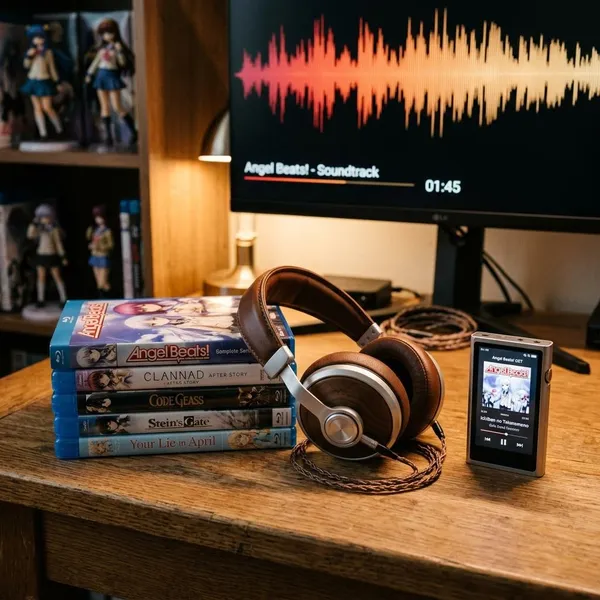
Why the Angel Beats Soundtrack Stands Out
The Angel Beats! soundtrack stands out because it gives the anime emotional consistency even when the writing moves too fast. Music helps the series shift from comedy to sadness, from chaos to reflection, without losing its overall mood.
This is also one of the safest reasons to recommend the show. Even viewers who are mixed on the pacing often remember the opening, ending, insert songs, and softer score pieces.
Girls Dead Monster Adds Energy
Girls Dead Monster gives the afterlife school a sense of youth and rebellion. The band performances are not just background flavor; they make the world feel more alive and give the characters a way to express frustration without turning every emotion into dialogue.
For viewers who like music anime elements, these scenes add a different kind of appeal. They bring movement and attitude to a show that could otherwise become too heavy.
The Score Builds Emotion
The instrumental score does a lot of quiet work. Piano, strings, and soft emotional cues often arrive exactly when the series needs a scene to settle or hurt more.
Because the anime is short, that matters. The score sometimes gives emotional weight to scenes that might have needed more buildup on the writing side.
The Opening and Ending Set the Mood
"My Soul, Your Beats!" sets the tone before the story even fully explains itself: beautiful, lonely, and mysterious. "Brave Song" then gives many episodes a reflective landing, which helps the emotion linger after the scene ends.
Together, they create a clear emotional signature. Even if an episode is chaotic, the opening and ending pull the series back toward the same bittersweet feeling.

Conclusion
Angel Beats! is still worth watching if you want a short anime with a strong emotional finish, memorable music, and a premise that feels different from a standard school drama. Go in expecting rushed pacing and underused side characters, and it is much easier to appreciate what the series does well: turn grief, humor, mystery, and music into a flawed but genuinely lasting experience.