The best classic anime streaming service is usually not one single app. RetroCrush is the strongest starting point for older cult titles, Tubi is the easiest free option, Hulu works well for many familiar 90s picks, and Crunchyroll makes sense if you also watch newer anime. Check your must-watch titles first, because classic anime libraries change more often than most people expect.
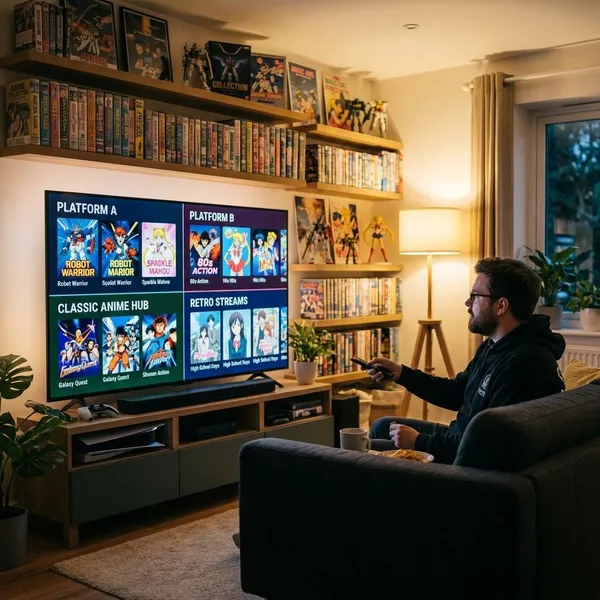
Classic anime streaming services compared
Classic anime is awkward to stream because the market is split between focused retro platforms, free ad-supported services, and mainstream apps that only carry selected older titles. The best choice depends on whether you want to browse rare older releases or simply rewatch a few familiar favorites without paying for another subscription.
| Service | Best for | Main tradeoff |
|---|---|---|
| RetroCrush | 70s titles, cult classics, OVAs, retro browsing | Catalog and access can vary by region |
| Tubi | Free casual viewing and 90s discoveries | Ads and a less curated anime library |
| Hulu | Recognizable 90s favorites and household viewing | Limited regional availability |
| Crunchyroll | Anime fans who want old and new shows together | Classic depth is uneven compared with newer anime |
Free access and paid plans
Start free if you are only testing the retro anime waters. Tubi and RetroCrush's free tier are good low-risk choices, especially if you watch one film on a weekend or sample a few older series without building a long watchlist.
- Use Tubi first if cost matters more than curation.
- Try RetroCrush if you want the platform itself to feel retro-focused.
- Keep Hulu or Crunchyroll if you already use them for other shows.
Retro library depth
RetroCrush has the clearest identity for deep retro browsing. It is better suited to cult films, older TV anime, and oddball releases that do not always fit neatly into mainstream anime menus.
Tubi can also surprise you, but it feels more like digging through a mixed shelf than walking into a curated archive. That can be fun if you enjoy unexpected finds, but frustrating if you are chasing a specific era or creator. Hulu and Crunchyroll tend to be better for familiar names than obscure one-off releases.
Movies, series, and OVAs
Classic anime is not only about long TV shows. The 80s and 90s especially were packed with films and OVAs, so a good retro service should not treat shorter formats as filler.
If you have limited time, a 90-minute movie or four-episode OVA may be more realistic than starting a 50-episode series. If you want weekend binges, check whether a platform has full runs rather than scattered films, sequels, or specials.
Subbed and dubbed options
Language options vary title by title. Crunchyroll is usually a safe place to look for subtitles, while Hulu and Tubi can be useful for older English dubs, especially for more recognizable 90s releases. RetroCrush often has a mix, but you should check each title page before assuming both versions are included.
This matters most for two kinds of viewers: nostalgic fans who want the dub they remember, and households where one person is new to older anime. A classic dub can make a show easier to share, while original audio may be the better choice if you care about tone, performances, or older translation quirks.
Regional availability
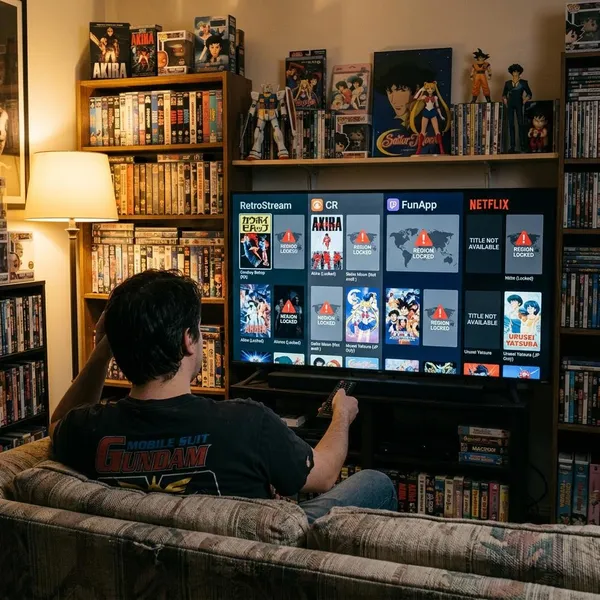
Regional access should be checked before price. A service can look perfect in a recommendation list and still have a smaller catalog where you live. Hulu is especially limited by region, RetroCrush is not equally available everywhere, and even wider platforms like Crunchyroll can have different classic titles by country.
Best service for each anime era
The easiest way to choose is to start with the decade you care about most. A strong 90s service may not help much if you are looking for 70s space opera or 80s OVA experiments.
RetroCrush for 70s cult classics
RetroCrush is the best first stop for 70s cult classics because older, niche titles are less likely to be prioritized by mainstream platforms. It gives vintage anime more context instead of placing it beside glossy new releases where the age gap can feel harsher.
For newer viewers, 70s anime may feel slower and rougher than modern shows. That is not a flaw by itself. If you are curious about early sci-fi, action, or foundational TV anime, a retro-focused library helps you approach those titles with the right expectations.
RetroCrush and Crunchyroll for 80s anime
For 80s anime, RetroCrush and Crunchyroll work best as a pair. RetroCrush is better for cult material, fantasy films, darker sci-fi, and OVA-era discoveries. Crunchyroll is more useful if your taste overlaps with bigger catalog titles and you already want access to newer anime.
- Choose RetroCrush for exploratory watching and unusual older releases.
- Choose Crunchyroll if classic anime is only part of your anime habit.
- Use both briefly if you are building an 80s watch month around several specific titles.
Hulu and Tubi for 90s favorites
Hulu and Tubi are often the most practical choices for 90s anime. This era has more recognizable titles for English-speaking fans, better-known dubs, and a stronger overlap with household viewing.
Tubi is the easier casual pick because it is free. Hulu is better when you want a smoother mainstream app and already use it for other entertainment. If you are introducing someone to older anime for the first time, 90s titles on these services are often less intimidating than deeper 70s or 80s cuts.
How to choose a classic anime streaming service
Do not choose by brand first. Choose by your watchlist, your tolerance for ads, and whether you want deep discovery or convenient favorites. That order prevents most bad subscriptions.
Set your budget and ad limit
If you watch classic anime once or twice a month, a free service is usually enough. If you plan to marathon films, OVAs, or a full older series, ads may become annoying quickly.
A sensible setup for many fans is free most of the time, then one paid month when a platform has several titles you want to finish. Paying year-round only makes sense if retro anime is part of your regular viewing routine.
Check your favorite titles first
Search for your must-watch titles before you subscribe. Classic anime rights can be split across services, and a platform may have a movie but not the series, a sequel but not the original, or only one language version.
Do this even if you enjoy browsing. Discovery is a bonus; missing the two titles you actually came for is still disappointing.
Choose between deep cuts and big names
If you want famous titles that shaped international anime fandom, Hulu, Tubi, and Crunchyroll may cover enough ground. If you want forgotten fantasy films, old sci-fi oddities, and cult OVAs, RetroCrush is usually the stronger bet.
This is where many viewers choose the wrong service. A large library is not automatically a useful library. The better question is whether the service matches your taste: recognizable landmarks or strange late-night discoveries.
Look for your preferred format and language
Check the format before judging the catalog. Some people want full TV series to stretch across several weeks; others are happier with short OVAs and films that fit into one evening.
- For a shared living-room watch, prioritize dubs, stable apps, and familiar titles.
- For solo retro digging, prioritize subtitles, OVAs, films, and older niche releases.
- For long series, confirm episode counts before starting.
Confirm access in your region
Region checks are not a small technical detail; they can decide the whole purchase. Before paying, open the actual app or website in your country and search for a few specific titles, not just the platform name.
- Search for three to five must-watch titles.
- Check whether each one is a full series, film, OVA, or partial release.
- Confirm subtitles and dubs on the title page.
- Test the app on the device you use most.
- Compare one free option with one paid option before committing.
Limits of classic anime streaming
Classic anime streaming has built-in limits that newer anime usually avoids. Old rights deals, missing materials, incomplete releases, and country-by-country licenses all affect what you can legally watch.
Libraries change as licenses expire
A title available today may disappear later when a license ends or moves to another distributor. That is especially common with niche older anime, where renewal may depend on a smaller audience.
If a favorite appears legally and you know you want to watch it, move it up your list. Saving every classic for "someday" is risky when catalogs rotate quietly.
Some series are incomplete
Incomplete access is common. A service might carry selected seasons, one film, a sequel OVA, or a remaster without the related original series.
Before starting an older franchise, check the release order and episode count. This matters more for a new viewer than a returning fan, because starting with the wrong piece can make an otherwise good series feel confusing.
Video quality varies by release
Video quality is title-specific. Some classics look excellent thanks to careful remasters, while others may look soft, grainy, cropped, or inconsistent because of the materials available.
Do not judge an entire service from one rough transfer. At the same time, if picture quality is important to you, preview a title before committing to a long watch.
Titles differ by country
Country differences can be dramatic. Two viewers using the same platform in different regions may see different classic catalogs, language options, or even different availability for the same franchise.
Conclusion
The smartest choice is to start with the titles and decade you care about most, then match the service to that need. RetroCrush is the best bet for deeper retro discovery, Tubi is the easiest free test, Hulu is useful for approachable 90s favorites, and Crunchyroll is convenient if you also follow modern anime. If your watchlist is serious, expect to combine one free service with one paid option rather than relying on a single app forever.