Overlord is worth watching if you want a dark isekai where the thrill comes from power, politics, and moral decline rather than a hero struggling to survive. It is much easier to recommend to viewers who enjoy villain-led fantasy than to anyone looking for fair fights, clean heroism, or consistently polished animation.
What Overlord does well
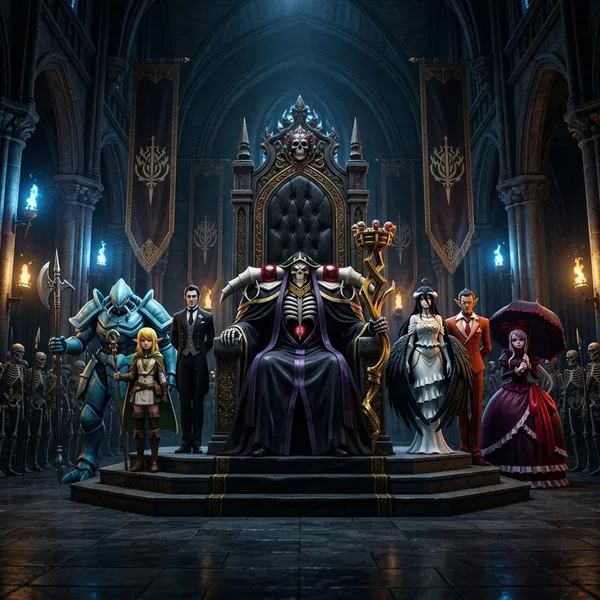
The strongest reason to watch Overlord is that it knows exactly what kind of story it wants to be. Ainz is not climbing from weak to strong; he begins at the top, surrounded by loyal monsters who treat his every word like divine strategy. That shifts the appeal from "Can he win?" to "What happens when the wrong person has too much power?"
Ainz is powerful but personally uncertain
Ainz works because his public image and private thoughts rarely match. To Nazarick, he looks calm, brilliant, and untouchable. Inside his head, he is often guessing, panicking, or hoping his subordinates do not notice how much he is improvising.
That contrast gives the anime its best comedy. A vague comment from Ainz can become a "master plan" once Demiurge interprets it, and the joke lands because everyone around him is too loyal or too afraid to question him.
Nazarick has a memorable supporting cast
Nazarick could have been boring if everyone simply worshipped Ainz in the same way. Instead, the main guardians have different kinds of loyalty: Demiurge is strategic, Albedo is obsessive, Shalltear is volatile, Sebas is restrained, and Cocytus brings a more warrior-like dignity.
The world extends beyond the main characters
Overlord spends a surprising amount of time with adventurers, nobles, soldiers, villagers, priests, and rulers who do not understand what Nazarick really is. That outside perspective makes the world feel less like a backdrop and more like a place being slowly destabilized.
Political schemes create long-term payoffs
The anime is often better at political pressure than action suspense. Rumors, false identities, public displays of power, alliances, and staged victories can matter several episodes later. Nazarick does not only defeat enemies; it changes how countries, guilds, and rulers make decisions.
Dark comedy balances the cruelty
The show can be brutal, but it is not grim in only one note. Ainz's nervous inner monologue, Albedo's possessiveness, Shalltear's pride, and Demiurge's overthinking give the series a strange comic rhythm.
Where the Overlord anime falls short
The main flaws are easy to name: uneven pacing, limited physical danger for Ainz, side stories that sometimes feel like detours, inconsistent CGI, and a level of cruelty that will push some viewers away. None of these ruin the anime if the core premise works for you, but they are real enough to affect who should start it.
Some arcs move too slowly
The pacing is not bad all the time, but it is uneven. Certain arcs spend a lot of time on local communities or side groups before Nazarick's role becomes clear. The Lizardman arc is the common test case: some viewers appreciate the world-building, while others feel it interrupts the main hook.
If you are sampling the series, give it more than one or two episodes, but do not force yourself through an entire season if you dislike the structure. Overlord continues to use outside perspectives throughout its run.
Ainz rarely faces a believable physical threat
Ainz's overwhelming power is the fantasy, but it also reduces combat suspense. Many fights are less about whether he can win and more about how completely he will control the situation.
That is satisfying when the scene is about intimidation, reputation, or strategy. It is weaker when you want the thrill of a dangerous opponent. The anime tries to move suspense into politics and consequences, but it cannot fully replace the feeling of a true rival pushing Ainz to his limit.
Side stories can delay the main plot
Side stories are valuable when they show what Nazarick looks like from the outside. They are frustrating when they repeat the same lesson: ordinary people are outmatched.
- Good side material reveals a new faction, social rule, moral contrast, or political weakness.
- Weak side material delays Ainz without changing how you understand the world.
- Best viewing mindset is to treat side characters as evidence of impact, not always as long-term leads.
The CGI is noticeably inconsistent
The CGI criticism is fair. Some monster shots, crowd scenes, and large-scale battles look stiff compared with the stronger 2D character work. This is especially distracting because those scenes are often meant to feel terrifying or grand.
The cruelty may alienate some viewers
Overlord is not a comfortable power fantasy. The anime often lets you spend time with sympathetic people before showing how little protection they have against Nazarick. That can feel bold, but it can also feel unpleasant.
This is the clearest "do not watch" warning. If you need the main character to remain basically heroic, or if you dislike stories where innocent people are crushed to prove a political point, Overlord may not be worth your time.
Is Ainz a strong main character?
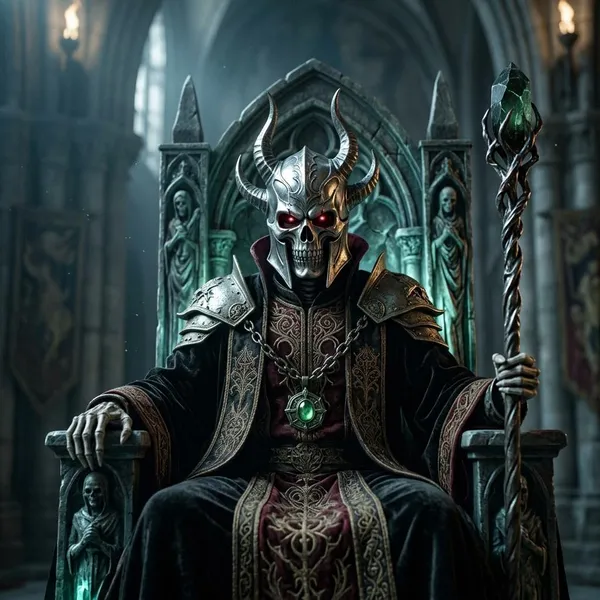
Ainz is a strong main character because he is not interesting for the usual reasons. He rarely needs to become stronger, and he is not defined by underdog grit. His appeal comes from the gap between the role he performs and the person still trapped behind it.
His public image hides constant anxiety
Ainz's best character trait is his fear of being exposed as less brilliant than everyone believes. He is not usually afraid of enemies; he is afraid of failing the performance of being "Ainz Ooal Gown."
This gives even small conversations a second layer. The audience hears the uncertainty while the world sees only command, which keeps his scenes from becoming empty displays of power.
His overwhelming power drives the fantasy
The series would not work if Ainz were only slightly stronger than everyone else. His ridiculous strength is the point. He changes diplomacy, religion, military planning, and public fear simply by existing.
His morality becomes increasingly darker
Ainz does not stay comfortably morally gray. He begins with traces of ordinary human attachment, especially toward his guild and the memory of YGGDRASIL, but his decisions become colder as Nazarick's interests take priority.
The change is effective because it is gradual. He does not suddenly turn evil in one scene; he adapts to power, emotional distance, and the expectations of his followers until cruelty becomes easier to accept.
His lack of serious rivals limits suspense
The biggest weakness in Ainz's character setup is the shortage of long-term rivals who can truly pressure him. A stronger strategic, magical, or moral counterforce would make his victories sharper and his mistakes more dangerous.
Without that, the anime often relies on dramatic irony instead of direct suspense. That can still be clever, but it means some conflicts feel more like demonstrations than struggles.
Why the supporting characters matter
The supporting cast is not just decoration around Ainz. These characters decide how Nazarick behaves when Ainz is vague, absent, or misunderstood. They turn the tomb from a cool headquarters into a functioning, frightening political force.
The outside cast matters just as much in a different way. They show the cost of Nazarick's rise, which stops the anime from feeling like a simple victory lap.
Demiurge drives Nazarick's expansion
Demiurge is one of the most important characters because he gives Ainz's accidental authority practical form. When Ainz says something unclear, Demiurge often supplies the ruthless plan that makes it seem intentional.
That makes him funny in the moment and terrifying in the long run. He is the character who most clearly turns misunderstanding into policy.
Albedo turns loyalty into obsession
Albedo is memorable because her devotion is both comic and dangerous. Her affection for Ainz can be absurd, but she is also intelligent, powerful, and possessive enough to make that affection feel unstable.
She shows one of the series' sharper ideas: absolute loyalty is not automatically comforting. In Nazarick, love, control, status, and violence can sit very close together.
Shalltear brings power and unpredictability
Shalltear adds volatility to a cast that can otherwise feel highly controlled. She is strong enough to matter, emotional enough to disrupt the room, and proud enough to make scenes feel less orderly.
Her value is not only combat. She introduces risk inside Nazarick's own system, where loyalty is expected but personality still causes problems.
Sebas offers a different moral perspective
Sebas gives the anime a needed moral contrast. He remains loyal to Nazarick, but he responds to suffering with more dignity and compassion than many of the other guardians.
That difference keeps the darkness from becoming flat. When Sebas is involved, the show can explore mercy without pretending Nazarick is suddenly good.
Outside characters reveal Nazarick's true impact
Outside characters are where Overlord often becomes most uncomfortable. Adventurers, villagers, nobles, and soldiers show what Ainz's rise means to people who cannot possibly match him.
How the anime changes across its seasons
Overlord changes from a trapped-in-a-game mystery into a wider political fantasy. The early appeal is Ainz learning how to act as a ruler; the later appeal is watching countries, factions, and belief systems respond to Nazarick's expansion.
Season 1 establishes Ainz and Nazarick
Season 1 is the foundation. It introduces YGGDRASIL, Nazarick, the guardians, Ainz's private uncertainty, and the basic rules of the new world.
It is also the season with the clearest sense of discovery. Ainz is still testing the limits of the setting, which gives the early episodes a mood that later seasons replace with larger-scale consequence.
Season 2 expands the world beyond Ainz
Season 2 is where the anime asks for more patience. It spends more time away from Ainz and gives attention to groups that seem minor at first.
For binge viewers, this can work better than watching week to week because the payoff arrives faster. For action-first viewers, this is often the point where the pacing feels most debatable.
Season 3 delivers major victories but weaker visuals
Season 3 contains some of the anime's biggest demonstrations of power and reputation. Nazarick's influence becomes harder for the world to ignore, and Ainz's public image grows into something close to myth.
The drawback is visual execution. Some of the scenes that should feel enormous are weakened by awkward CGI, so the story impact is stronger than the animation impact.
Season 4 brings stronger political payoffs
Season 4 is more rewarding if you enjoy diplomacy, governance, and long-term consequences. Earlier setup starts to matter more clearly, and Nazarick feels less like a hidden threat and more like a permanent political reality.
This is not the best season for someone who only wants novelty. It is better for viewers who like seeing a fantasy world reorganize itself around an unbeatable power.
The Sacred Kingdom continues the darker expansion
The Sacred Kingdom material pushes the franchise further into national crisis, ideology, and suffering on a larger scale. It fits the darker side of Overlord because it tests ideas like justice, leadership, and heroism against brutal political manipulation.
If your favorite parts of the series are its bleak consequences and public myth-making, this direction is promising. If you already find the cruelty tiring, this is unlikely to soften the experience.
Conclusion
Overlord is easiest to recommend to viewers who want a dark, political isekai about power rather than a heroic adventure about growth. Its pacing, CGI, and cruelty are real barriers, but Ainz's anxious performance as a supreme ruler, Nazarick's dangerous cast, and the widening consequences of conquest give the anime a strong identity. Try it if villain-led fantasy sounds exciting; skip it if you need a lovable hero, balanced fights, or consistently beautiful action.