Redline is worth watching if you want one of the most visually intense anime movies ever made, but it is not the film to choose for a layered story or deep character drama. The cleanest verdict for a redline anime review is this: watch it for animation, speed, sound, and style; lower your expectations for plot complexity.
Quick Verdict on Redline
Redline is a strong recommendation for animation fans, action fans, and anyone who wants a standalone anime movie that feels loud, handmade, and completely committed to its own madness. It is less convincing if your main reason for watching anime films is emotional depth, tight plotting, or complex world politics.
| If you want... | How Redline fits |
|---|---|
| Animation spectacle | Excellent choice; this is the main reason to watch. |
| Pure racing energy | Very strong, especially if you do not need realism. |
| Deep character writing | Limited; the characters are stylish but not heavily developed. |
| A quick standalone movie | Easy fit; no series knowledge is needed. |
Best for Animation and Action Fans
Redline works best when you are in the mood to be hit by movement, color, engine noise, and impossible speed. If you are the kind of viewer who pauses a movie to admire a cut of animation, this is an easy recommendation.
Strongest Point Is the Visuals
The visuals are the reason Redline still gets talked about. Heavy outlines, warped speed effects, exaggerated faces, and dense vehicle designs give the movie a physical punch that cleaner digital animation often struggles to match.
Biggest Weakness Is the Simple Story
The story is functional rather than rich: JP wants to race, Sonoshee gives that goal a more personal edge, and Roboworld turns the event into a war zone. That is enough to keep the film moving, but not enough to make the drama especially surprising.
What Is Redline About?
Redline is a 2009 sci-fi racing anime movie directed by Takeshi Koike and produced by Madhouse. The race itself is a no-rules galaxy-wide event held every five years, and the drivers who enter are chasing glory as much as survival.
The movie follows Sweet JP, a reckless but likable racer who gets pulled into the most dangerous version of that event. Around him are rival racers, criminal pressure, military interference, and a light romantic thread with Sonoshee McLaren.
JP Chases the Ultimate Racing Dream
JP is not a complicated lead, but he is a useful anchor for a movie this wild. He races because racing is the thing that gives him identity, and his mix of confidence, recklessness, and vulnerability keeps him from feeling like a blank action hero.
His design also does a lot of work. The pompadour, the grin, the old-school attitude, and the way he throws himself into danger make him memorable even when the script keeps his inner life fairly simple.
Sonoshee Raises the Personal Stakes
Sonoshee gives JP's racing dream a sharper emotional point. Their connection is not written as a deep romance, but it adds rivalry, attraction, and a sense that JP wants to prove himself to someone who actually understands the danger.
Roboworld Turns the Race Into Chaos
Roboworld is where the movie stops feeling like a racing tournament and becomes a full sci-fi spectacle. The planet's military does not want the race there, so the drivers are not only competing with each other; they are pushing through weapons, monsters, and political panic.
That escalation is ridiculous, but it fits the film. A grounded motorsport story would make the thin plot more obvious. Roboworld gives Redline permission to become bigger, louder, and stranger by the minute.
What Redline Does Best
Redline is strongest when it stops asking you to think too hard and starts making you feel speed. The movie's best qualities all support that goal: animation, sound, design, editing, and world-building are aimed at impact.
Its appeal is also very immediate. You can show someone a few minutes of the opening race and they will understand why the film has a cult following, even if they have never heard of it before.
Wild Hand-Drawn Animation
The hand-drawn animation is the film's biggest achievement. Redline is widely known for its enormous traditional animation effort, with only limited digital support compared with how handmade the final movie feels.
What matters is not just the production trivia. The cars bend, rattle, and stretch under pressure; faces distort under acceleration; explosions bloom in thick, aggressive shapes. The result feels less like clean simulation and more like speed drawn from instinct.
Relentless Racing Energy
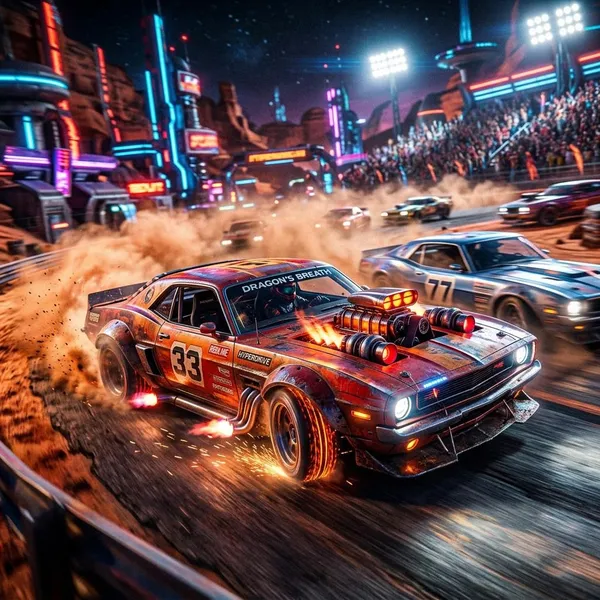
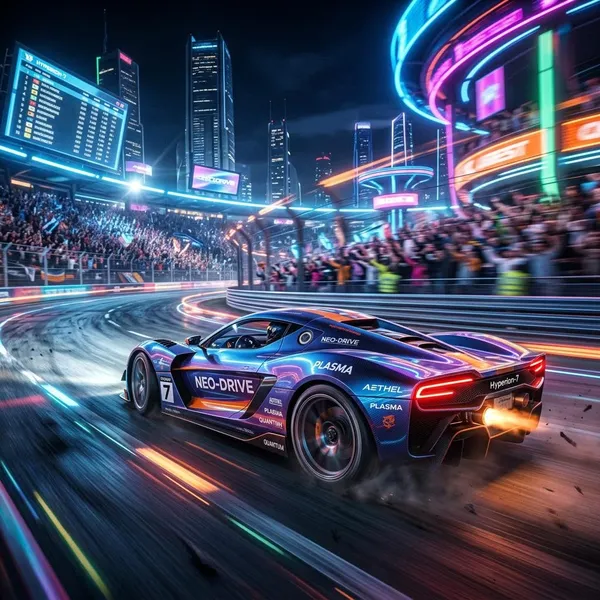
The racing scenes are built for sensation rather than strategy. You are not watching for careful pit timing, realistic engineering, or tactical driving lines; you are watching for near-collisions, reckless boosts, and the feeling that the whole frame might tear apart.
That makes Redline a better fit for viewers who enjoy adrenaline over realism. If you want the fantasy of racing pushed far past believability, it delivers. If you want something closer to serious motorsport, it probably will not satisfy that itch.
Bold Character Design
The character design keeps the chaos readable. JP, Sonoshee, Machine Head, and the other racers are easy to recognize by silhouette, attitude, and vehicle style, which matters when the screen is packed with motion.
That is one reason the movie remains fun between major races. Even minor characters look as if they belong to a larger, weirder universe, instead of feeling like background filler.
Powerful Music and Sound
James Shimoji's music gives the movie much of its pulse. The score is hard-driving and electronic, but the sound effects are just as important: engines roar, metal scrapes, boosters slam, and crashes land with real weight.
- Use headphones if you are watching alone.
- Avoid tiny phone speakers if possible; the race scenes lose force.
- Expect volume and intensity rather than a relaxed background watch.
Memorable Sci-Fi World-Building
The world-building works because the movie does not stop to explain every species, faction, or machine. It throws you into alien crowds, criminal deals, military paranoia, and impossible technology, then trusts the visuals to carry the mood.
Where Redline Falls Short
The main weakness is not hard to spot: Redline is more interested in impact than depth. That is not automatically a flaw, but it does mean the movie has limits depending on what you want from it.
A Thin Main Story
The main plot gives the film direction, not richness. JP enters the race, the danger escalates, and the finale turns everything up. It is clean and easy to follow, but it rarely surprises.
This is where some viewers split. A late-night action watch makes the simplicity feel efficient. A focused "best anime films ever" viewing may make the same simplicity feel like missed potential.
Limited Character Depth
JP and Sonoshee are likable enough to follow, but most characters are defined more by style than by change. You may remember their looks, vehicles, and attitude more clearly than their motivations.
Underdeveloped Side Plots
The gangster tension, military conflict, and bits of personal history add texture without becoming fully satisfying storylines. They make the world feel larger, but they rarely get enough time to pay off on their own.
That is fine if you see them as fuel for the spectacle. It is less satisfying if you expect each thread to build toward a strong dramatic resolution.
Style Often Comes Before Substance
Redline chooses style almost every time, and the movie is honest about that choice. The risk is that the excitement can feel emotionally distant once the race is over.
Still, style is not meaningless here. The animation, sound, and design are the point, not decoration around the point. Whether that is enough depends on your tolerance for a film that is more thrilling than thoughtful.
Who Should Watch Redline?
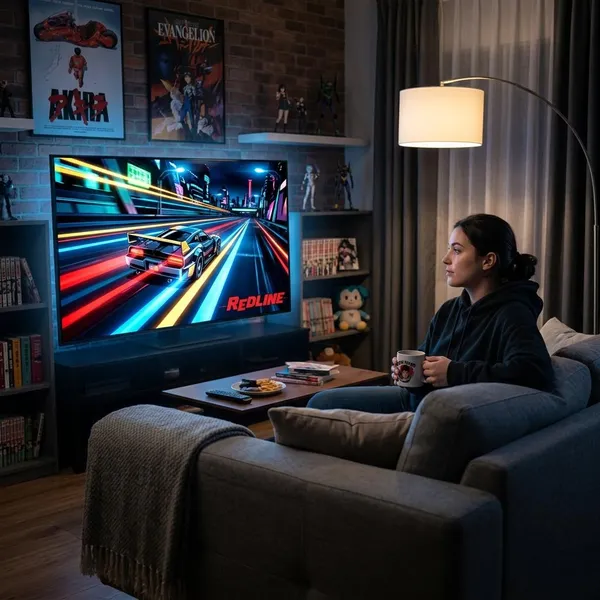
Redline is easiest to recommend when the viewer wants a short, self-contained blast of animation. It is not homework, and it does not require a franchise commitment. The important part is choosing the right moment for it.
Watch it when you want energy, not calm. It is a poor fit for background viewing because so much of its value is in timing, movement, and sound. It is a much better fit when you can give it your attention for one sitting.
Animation Fans Who Love Visual Spectacle
Animation fans are the safest audience for Redline. Even if the story does not become a favorite, the craft is worth seeing because the movie pushes hand-drawn action in a way that still feels rare.
It also works well as a reminder of what animation can do better than live action: exaggerate speed, bend bodies and machines, and turn physical impossibility into something that feels immediate.
Racing Fans Who Want Pure Adrenaline
Racing fans should watch it if they care more about thrill than realism. This is not a technical racing film; it is racing as noise, danger, ego, and spectacle.
Sci-Fi Fans Who Enjoy Wild Worlds
Sci-fi fans who enjoy strange settings should give it a try, especially if visual imagination matters more to them than detailed lore. The movie is full of alien designs, military hardware, bizarre biology, and hostile environments.
Casual Viewers Who Want a Standalone Movie
Casual viewers can enjoy Redline because the premise is immediate and the movie does not ask for prior anime knowledge. The better question is mood: choose it when you want something fast, colorful, and intense.
- Good situation: a weekend watch when you want a compact action movie.
- Good situation: showing someone how expressive anime movie animation can be.
- Less ideal situation: watching while distracted, tired, or expecting a quiet character drama.
Conclusion
Redline is not a perfect anime movie, but it is an easy film to respect and a very easy film to remember. If you want story depth first, its thin writing may hold it back; if you want hand-drawn racing spectacle with real force and personality, it is absolutely worth watching.