Neon Genesis Evangelion is still worth watching, but only if you want an anime that gets more uncomfortable, psychological, and abstract as it goes. A good neon genesis evangelion anime review should make that clear up front: the mecha battles are important, yet the real draw is how the series turns heroism into fear, dependency, and emotional collapse.
How Evangelion reworks the mecha formula
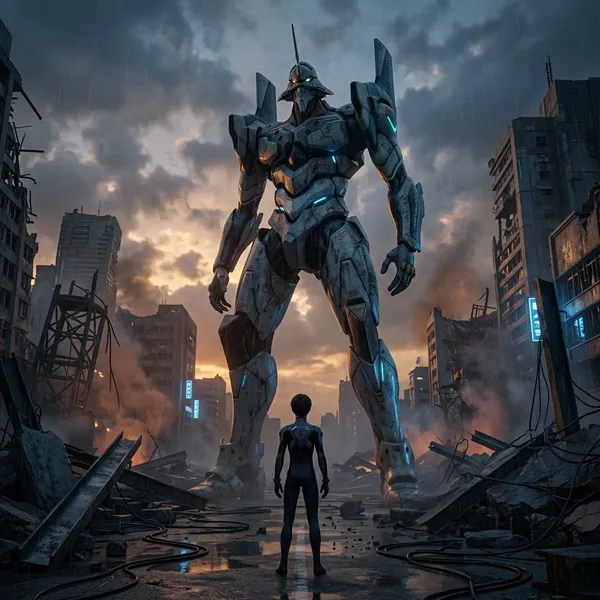
At first glance, the setup looks familiar: giant enemies attack, a secret organization responds, and teenagers pilot massive weapons to protect humanity. The difference is that Evangelion does not treat the robot as a fantasy of power. It treats it as a burden placed on children who are not emotionally equipped to carry it.
If you usually avoid mecha because you expect hardware talk, military procedure, or simple victory arcs, this is the kind of show that may surprise you. If you mainly want clean action, confident heroes, and a satisfying mission-by-mission payoff, it may feel deliberately hostile.
Angel battles frame personal conflict
The Angel fights work because they expose the pilots rather than simply testing their skill. Shinji's hesitation, Asuka's need to prove herself, and Rei's emotional distance all change the meaning of combat. A battle can be visually exciting and still leave the characters feeling worse afterward.
- Watch for the emotional trigger: each fight usually presses on a fear, insecurity, or dependency.
- Do not expect easy triumph: survival often matters less than what the battle reveals.
- Notice the aftermath: the quiet scenes after conflict often carry the real damage.
The Evas blur machine and monster
The Evangelions are iconic because they never feel like safe, heroic machines. Their thin bodies, sudden violence, and organic movement make them look controlled rather than fully controllable. That unease gives the action a horror edge, even before the story explains why the Evas feel so wrong.
NERV turns heroism into pressure
NERV should be the reassuring command center. Instead, it becomes a place of secrecy, manipulation, and adult failure. The pilots are needed, but they are not truly protected.
That choice is central to the show's influence. Evangelion takes the usual "chosen young pilot" idea and asks a harsher question: what happens when being chosen mostly means being used?
Why the characters feel so compelling
The cast is memorable because the characters are not designed to be consistently likable. They retreat, lash out, freeze, perform confidence, and hurt each other in ways that can be frustrating but recognizable. For some viewers, that makes them painfully human; for others, it makes the show exhausting.
Shinji embodies fear and avoidance
Shinji is often criticized for being passive, but that passivity is the point. He wants approval, especially from Gendo, yet he is terrified of rejection and responsibility. His choices can be maddening if you want a traditional hero arc, but they are painfully coherent if you see him as a frightened teenager trying to survive emotional abandonment.
Asuka hides pain behind pride
Asuka attacks the world before it can dismiss her. Her confidence is not simple arrogance; it is a shield built around the fear of being useless, ordinary, or unwanted. That makes her hardest moments hit with real force, because every failure threatens the identity she has built to keep herself standing.
She also gives the show a different kind of pain from Shinji's. He collapses inward; she pushes outward. Their contrast keeps the character drama from becoming one-note.
Rei struggles with identity
Rei can seem distant at first, and viewers who prefer openly expressive characters may need patience with her. Her quietness is not just a mystery-box trait, though. She becomes one of the show's main ways of asking what selfhood means when your life has been defined by other people's purposes.
Misato balances care and dysfunction
Misato brings warmth into a cold story, but she is not a stable savior figure. She tries to care for Shinji, creates moments of messy domestic comfort, and still remains part of the same institution that keeps putting him in danger. That contradiction is what makes her feel adult rather than idealized.
- As a guardian, she gives Shinji more care than NERV does.
- As an officer, she still depends on him to fight.
- As a person, she has her own unresolved damage.
Gendo drives the central trauma
Gendo's cruelty is quiet, which makes it more unsettling. He wounds Shinji through distance, withheld affection, and cold usefulness rather than constant shouting. The world-ending stakes may become abstract, but the emotional center stays simple: a child keeps reaching toward a father who treats him like a tool.
The themes that define Evangelion
Evangelion lasts because its themes are not just decorative. The series keeps returning to the same painful pattern: people want connection, but the ways they protect themselves from pain make connection harder.
This is also where the show becomes divisive. It does not always resolve its ideas neatly. If you like stories that diagnose emotional damage more than they comfort you, the thematic weight is a strength. If you need closure, reassurance, or clean answers, the later episodes may test your patience.
Isolation blocks real connection
The characters are rarely alone in a literal sense, yet they constantly fail to reach each other. Conversations stop short. Apologies do not land. Need turns into silence, anger, performance, or retreat. The show understands that loneliness can exist in a crowded room when being understood feels too dangerous.
Trauma shapes every relationship
Trauma in Evangelion is not background decoration. It changes how people ask for help, avoid intimacy, seek control, and repeat harm. The adults are not clean contrasts to the damaged teenagers; they are warnings about what unresolved pain can look like years later.
That is why the relationships feel heavy even when the plot is not explaining everything. People are not simply dramatic for the sake of conflict. They are acting from wounds they often cannot name.
Self-worth depends on outside approval
Shinji wants to be needed. Asuka wants to be admired. Misato ties meaning to responsibility. Even Gendo's control is shaped by fixation and dependency. The series keeps showing how fragile a person becomes when value has to be confirmed from the outside.
| Character pattern | What it protects | Where it breaks |
|---|---|---|
| Withdrawal | Fear of rejection | Connection becomes impossible |
| Performance | Fear of worthlessness | Failure feels catastrophic |
| Control | Fear of loss | Other people become tools |
Escapism offers comfort without healing
The series is sympathetic to escapism because it understands why people hide. Fantasy, routine, emotional numbness, and avoidance can make life bearable for a while. The warning is that comfort is not the same as recovery.
How the visuals and sound hold up
For a 1995 TV anime, Evangelion still holds up where it matters most: direction, mood, visual identity, and sound. It does show production limits, especially later on, so the best question is not whether it looks modern. The better question is whether its style still communicates tension effectively, and most of the time it does.
If you need constant fluid animation, some scenes will look rough. If you care more about framing, atmosphere, silence, and memorable imagery, the show remains striking.
Sharp direction builds tension
The direction uses stillness, awkward pauses, empty space, and uncomfortable framing to make scenes feel charged. Characters are often separated within the same room or held in compositions that make emotional distance visible. It is not always smooth, but it is rarely careless.
Angel battles still feel intense
The battles age better than many spectacle-driven action scenes because each Angel tends to bring a different problem, shape, or mood. The fights are not just about bigger explosions; they are about pressure, fear, and the pilots' unstable mental states.
- Best for: viewers who like tactical tension and strange enemy design.
- Less ideal for: viewers expecting nonstop choreography.
- Most important check: whether the emotional stakes make the action feel sharper to you.
Limited animation becomes expressive
There are repeated shots, long holds, and sequences where the budget strain is visible. Some of that is simply production reality. What keeps the show alive is how often those limits become part of the mood: stillness turns into dread, minimalism turns into psychological pressure, and roughness sometimes fits the breakdown happening on screen.
The soundtrack strengthens every mood
Shiro Sagisu's music gives the series a huge part of its identity, moving between military urgency, melancholy, eeriness, and sudden tenderness. A Cruel Angel's Thesis is still a perfect contrast to the show itself: bright, catchy, and almost too polished for a story about people falling apart.
The original Japanese performances are the safest first choice if you are unsure, because the emotional strain of the cast comes through clearly. Dubs vary by release and taste, so choosing one is less important than watching in a version where the performances feel raw rather than flattened.
Conclusion
Neon Genesis Evangelion is an easy anime to respect and a harder one to casually recommend. Watch it if you want a bold, uncomfortable character study wrapped in mecha imagery; skip or delay it if you mainly want clean action, emotional comfort, or a tidy ending. For the fullest experience, the original series followed by The End of Evangelion is still the strongest route, as long as you go in expecting ambiguity rather than easy catharsis.