Blood+ is still worth watching if you want a slow, character-first dark fantasy rather than a fast vampire action show. The safest answer for a blood plus anime review is: watch it for Saya's emotional arc, the heavy atmosphere, and the long payoff, but skip it if you need constant fights or quick plot movement.
Is Blood+ worth watching?
Yes, but only for the right kind of viewer. Blood+ asks for patience from the start, and its best qualities come from watching relationships, memories, and consequences build over 50 episodes. If you normally drop a show when it spends several episodes on setup, this one may feel heavier than enjoyable.
| Viewer expectation | How Blood+ fits |
|---|---|
| Dark fantasy with emotional weight | Strong match |
| Long character development | Strong match |
| Nonstop vampire action | Weak match |
| Short modern binge | Not ideal |
What Blood+ is about
Blood+ follows Saya Otonashi, a schoolgirl living in Okinawa with almost no memory of her past. Her ordinary life collapses after a violent encounter reveals that she is connected to monstrous creatures called chiropterans, and her personal search for answers grows into a much larger conflict.
The important part is that the story never becomes only about monsters. Family, identity, memory, and the cost of inherited violence stay close to the center, even when the plot expands across countries and organizations.
Saya begins with no memory of her past
Saya's missing memory is not just a mystery device. It explains why she begins the story so unsure of herself. She is not simply weak or passive; she is living without the context needed to understand her own body, her past, or the danger around her.
A violent encounter reveals her hidden abilities
The first major shift comes when Saya is forced into danger and her hidden abilities surface. The scene works because it feels disturbing before it feels empowering. Her power does not give her a clean heroic identity; it makes her normal life feel suddenly unstable.
Her search for answers becomes a global conflict
As Saya looks for the truth, she becomes tied to Red Shield, old experiments, hidden agendas, and a conflict far older than she first understands. The wider scope gives the anime scale, but it also explains part of the pacing problem: new places and factions often slow the direct path to confrontation.
Family and identity remain central to the story
The adoptive family angle is what keeps the premise grounded. Saya is not only asking what she is; she is also trying to protect the life and bonds that made her feel human. That tension gives the supernatural plot more emotional force than a simple monster-hunting setup would have.
What Blood+ does exceptionally well
The strongest parts of Blood+ come from patience used well. The anime lets loss linger, lets relationships change after trauma, and connects its mythology to personal pain instead of treating lore as decoration. When the series is at its best, the supernatural conflict feels intimate.
Saya receives gradual and believable development
Saya's arc works because the show allows her to hesitate, break down, and recover. Her growth is not just about becoming more capable in battle. It is about accepting knowledge she did not ask for and deciding what kind of person she can still be afterward.
Relationships carry lasting emotional consequences
Events in Blood+ usually leave marks. Deaths, loyalty, betrayal, and sacrifice affect later choices instead of being reset after one episode. That continuity is especially important in a long series because it gives the slower stretches a reason to exist.
The show also avoids making every important bond romantic. Family, duty, devotion, guilt, and protection all pull characters in different directions, which makes the emotional web feel richer.
The mystery expands without losing its personal focus
As the story introduces bloodlines, organizations, and older conflicts, the best revelations still come back to Saya. The lore matters because it changes how she sees herself and how other people relate to her.
The darker moments feel earned
Blood+ has violence and disturbing imagery, but its darkness rarely feels empty. The heavier scenes usually work because the story has already built a reason to care. That makes it a better choice for viewers who want tragedy with emotional context, not just shock value.
The ending rewards long-term investment
The final stretch is one of the main reasons the series remains easy to recommend to patient viewers. Without spoiling the details, the ending feels connected to the relationships, losses, and identity questions built across the run. It is not just a final fight; it is the point where the long setup matters most.
Where Blood+ falls short
The biggest weakness is not hard to identify: Blood+ is slow, and not every slow section is equally rewarding. Some episodes deepen the mood or characters; others feel like the story is taking the long route to a point it could have reached faster.
The opening episodes move slowly
The early episodes spend a lot of time on Saya's everyday life, family, health, and uncertainty. That setup is useful because it shows what she stands to lose, but it can feel quiet if you expect the main conflict to begin immediately.
Some middle arcs lose momentum
The middle portion is where many viewers start to feel the length. The story moves through new locations and builds the larger mythology, but not every arc has the same urgency. If you are watching one episode a night, the slower middle may feel atmospheric; if you are binge-watching, the dips are much more obvious.
Action arrives less often than expected
Anyone choosing Blood+ mainly for vampire combat should adjust expectations. The action is important, but it is not the show's main fuel. The anime is more interested in what violence does to people than in keeping the screen busy with fights.
- Common mistake: expecting a battle anime with gothic flavor.
- Better expectation: a tragic fantasy drama with bursts of action.
Supporting characters receive uneven attention
The wider cast gives the world more texture, but some characters are much better served than others. A few side characters leave a strong impression, while others feel like they could have carried more emotional or thematic weight than the anime gives them.
The length can make weaker episodes more noticeable
A weak episode in a 12-episode anime can be brushed aside. In a 50-episode series, repeated lulls become part of the viewing experience. That does not ruin Blood+, but it means the show is easier to appreciate if you accept uneven pacing as the price of its long-form payoff.
Why Blood+ feels so slow
Blood+ feels slow because its structure favors buildup over acceleration. It reveals answers gradually, pauses for emotional fallout, and uses travel arcs to widen the conflict. Some of that slowness is meaningful; some of it is simply uneven pacing.
The first thing to check is your tolerance for delayed payoff. If you enjoy seeing early details matter much later, the pacing may feel deliberate. If you need the central mystery explained quickly, it may feel like the anime is holding back too long.
The story reveals its mythology gradually
The series does not explain Saya, Diva, Red Shield, or the chiropterans all at once. It gives partial answers, then lets new information change the meaning of earlier scenes. That approach supports the mystery, but it can annoy viewers who prefer clear rules early.
Character drama often replaces immediate action
After major events, Blood+ often slows down to show grief, fear, guilt, or conflict inside the group. Those scenes are not filler when they change how characters behave afterward. They only become frustrating when the emotional pause lasts longer than the insight it provides.
Travel arcs delay major confrontations
The global journey makes the conflict feel larger, but it also interrupts momentum. New locations bring atmosphere and context, yet they sometimes delay the confrontations viewers are waiting for. This is one of the clearest trade-offs in the series.
Later payoffs depend on early setup
The later emotional beats work because the anime has spent so much time building loyalties, secrets, and unresolved pain. A practical approach is to give the show enough time to reveal its shape, but not to force yourself through it if the character drama still is not working for you after the story has fully opened up.
Why the characters carry Blood+
The characters are what keep Blood+ from becoming a slow lore-heavy vampire story. Saya gives the anime its identity crisis, Kai keeps it tied to ordinary family life, Haji adds restraint and devotion, and Diva turns the conflict into something personal rather than abstract.
Saya grows from uncertainty to determination
Saya is compelling because her strength comes with fear, guilt, and confusion. She starts as someone who does not understand herself and gradually becomes someone willing to face what her existence means. That growth feels more human than a simple power-up arc.
Kai represents family and normal life
Kai matters because he reminds the story what Saya is fighting to keep. He is not the most powerful presence in the cast, but that is the point. His role is emotional: home, loyalty, and the human life that supernatural conflict keeps threatening.
Haji provides loyalty and emotional restraint
Haji's quietness fits the tone of Blood+. He often communicates through presence, action, and restraint rather than long explanations. For some viewers, that makes him one of the most memorable characters; for others, his reserve may feel too distant. Either way, he gives the series much of its controlled, melancholy atmosphere.
Diva gives the central conflict a personal edge
Diva works because she is not just a villain placed at the end of the plot. Her connection to Saya makes the conflict feel intimate, mirrored, and tragic. The larger mythology becomes easier to care about because the central opposition has a personal wound at its core.
The wider cast adds sacrifice and moral tension
The supporting cast is uneven, but the stronger secondary characters add moral pressure to the story. Red Shield and other factions show people making harsh choices out of duty, fear, loyalty, or survival. That gray area helps the world feel lived-in rather than simply divided between heroes and monsters.
Conclusion
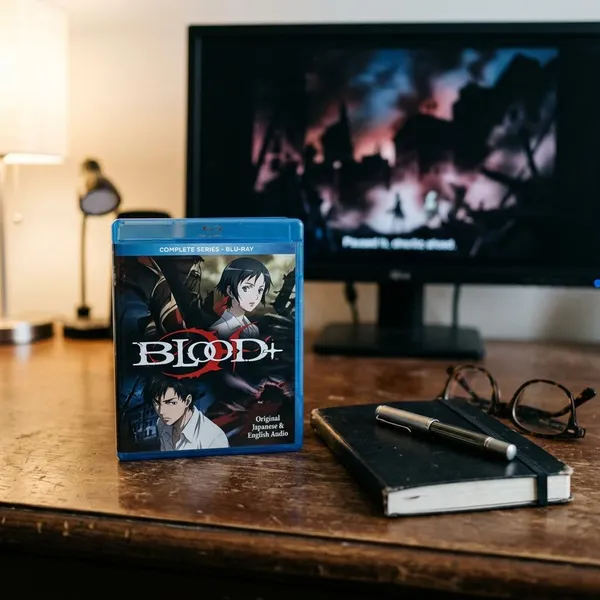
Blood+ is worth watching if you are ready for a long, dark, character-driven anime that values emotional buildup more than speed. Start it for Saya's journey, the atmosphere, and the eventual payoff; avoid it if you mainly want fast pacing, frequent fights, or a short commitment. For the right viewer, its flaws are real but not enough to erase what still makes it memorable.