A dakimakura is worth buying if you want both the character artwork and a real body pillow, but the value depends less on the print preview and more on the cover fabric, insert, size, and stitching. A good one can be comfortable enough for daily lounging or side sleeping; a cheap, vague listing can feel rough, flat, or awkward within days. This anime dakimakura pillow review focuses on the checks that actually affect comfort and whether the purchase makes sense for your space and budget.

What you get when buying a dakimakura
A dakimakura is usually made of two parts: the printed outer cover and the inner body pillow. Many listings show a fully stuffed pillow in the photo but sell only the cover, so the first thing to check is not the artwork, but what is actually included.
A removable character cover
The cover is the part with the character print, and it should be removable so you can wash it separately or swap it with other designs. This matters if you plan to use the pillow often, because the cover takes the most contact from your hands, face, bedding, and regular handling.
A separate inner body pillow
The insert gives the dakimakura its shape and support. If the listing says "cover only," you will need to buy the inner pillow separately, and that can change the real cost quite a bit.
- Too loose: the cover wrinkles, shifts, and looks underfilled.
- Too tight: the zipper and seams take extra stress, and the artwork may stretch.
- Too soft: the pillow feels nice at first but may collapse when used for sleeping.
Full-length support for sleeping or lounging
A full-length dakimakura is useful because it supports more than one area at once. A side sleeper may use it between the knees and against the chest, while someone who mainly watches shows or reads in bed may use it as a long support pillow rather than a sleep aid.
Licensed custom and unofficial artwork options
Dakimakura covers can be official licensed merchandise, custom printed pieces, or unofficial fan-made products. Official covers usually offer clearer sourcing and more predictable quality, while custom or unofficial options give you more character choice but require more careful checking.
How comfortable is a dakimakura
A dakimakura can be very comfortable, but not because it has anime artwork on it. Comfort comes from the surface fabric, the insert firmness, the size, and whether the pillow matches how you rest.
The fabric controls the surface feel
Two-way tricot is often the softer, smoother, more premium-feeling option, especially if the pillow touches your face or arms for long periods. Peach skin is usually more affordable and can be fine for occasional use, but it tends to feel drier and less stretchy.
The insert controls firmness and support
The insert decides whether the pillow feels like a supportive body pillow or just a long soft bag. For most buyers, a medium-firm insert is the safest choice because it still feels huggable but gives enough structure between the knees, under the arm, or along the torso.
The length supports full-body hugging
The long shape is what separates a dakimakura from a normal cushion. It lets you rest your arms, legs, and torso against one pillow instead of arranging several smaller pillows around you.
The width affects handling and bed space
A 50 cm width is a common sweet spot: wide enough to feel substantial, but not so bulky that it becomes hard to move. If you share a bed or use a narrow mattress, this is where the purchase becomes practical rather than just personal preference.
| Situation | What to prioritize |
|---|---|
| Small bed or shared bed | A manageable width and an insert that is not overstuffed |
| Daily side sleeping | Full length, medium support, and soft fabric |
| Mainly display use | Print quality, clean corners, and easy storage |
Personal sleep position shapes the experience
Side sleepers usually get the most functional value from a dakimakura because the shape naturally supports the upper and lower body together. Stomach sleepers may find the length awkward unless they like resting one side of the body against a pillow. Back sleepers can still enjoy one, but often more as a lounging pillow than a must-have sleep support.
Which dakimakura size should you choose
For most buyers, size should be chosen by use first and artwork second. A standard long size is better for sleeping and hugging, while smaller sizes are better for decoration, travel, or a low-commitment first purchase.
Compatibility also matters. Common sizes make it easier to replace the insert, buy extra covers, or rotate designs later without starting over.
160 by 50 cm for the widest cover compatibility
160 by 50 cm is often the easiest size to recommend because it has broad cover compatibility and gives adults more full-body coverage. If you expect to buy more covers later, this size usually gives you the least friction when shopping.
150 by 50 cm for selected covers and inserts
150 by 50 cm is still a proper dakimakura size, especially for shorter users, smaller rooms, or a specific cover that only comes in that format. It can feel slightly easier to handle than 160 cm while still working as a body pillow.
The trade-off is availability. Before choosing 150 cm, check whether you can find both the cover and a good insert in that exact size, not just one of them.
Smaller sizes for decoration rather than full-body use
Smaller anime pillows can look great on a chair, sofa, or shelf, but they should not be judged like full dakimakura body pillows. They are easier to store and cheaper to manage, but they will not give the same support for knees, arms, and torso.
Exact cover and insert measurements for a proper fit
Exact measurements matter because a dakimakura is large enough for small fitting problems to become obvious. Before buying, compare the listed cover size with the insert size and look for buyer photos or comments about fullness, zipper tension, and whether the corners fill properly.
- Confirm what is included. Do not assume the insert comes with the cover.
- Match the dimensions. A 160 by 50 cm cover needs a compatible insert, not a "close enough" guess.
- Check real feedback. Reviews often reveal sagging, tight zippers, or inaccurate sizing.
- Choose for use. Sleeping needs a full-length setup; display does not.
Quality details that matter most
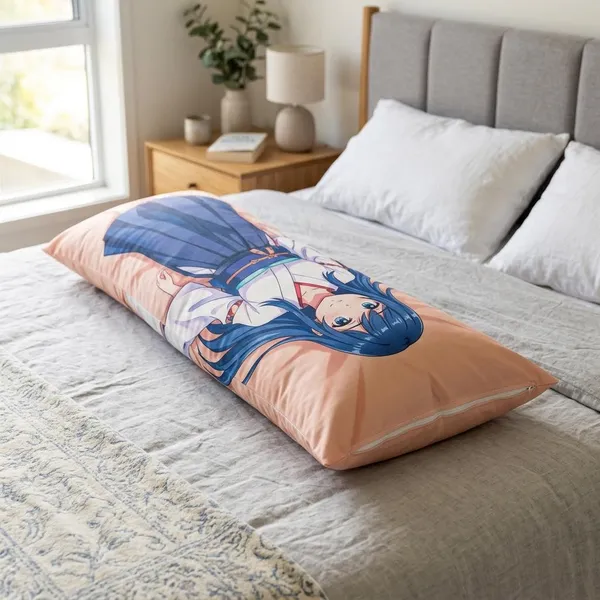
Quality shows up in the details you handle every day: print sharpness, color, seams, zipper, corners, dimensions, and insert fill. A dakimakura is hugged, compressed, washed, moved, and leaned on, so weak construction becomes noticeable quickly.
Sharp artwork without visible pixelation
Large prints expose low-resolution art fast. Check close-up images for clean lines around the eyes, hair, clothing edges, and small details. If the seller's preview is already blurry, the finished cover is unlikely to look sharper in person.
Accurate colors and consistent printing
Colors should look even across the full cover, not faded at one end or oddly shifted in skin tones, hair, or clothing. Some difference between screen and fabric is normal, but heavy filters, dark previews, or no real product photos make color accuracy harder to trust.
Strong seams and a concealed zipper
Strong seams matter because the cover is under tension once the insert is inside. Look for clean stitching, a zipper that is not exposed in an uncomfortable place, and buyer comments about whether the closure holds up after stuffing and washing.
A concealed zipper is not just nicer visually. It is also less likely to scratch, snag bedding, or become annoying when you hug the pillow from different angles.
Clean corners and correct dimensions
Clean corners help the insert fill the cover evenly instead of leaving empty tips or twisted edges. Correct dimensions are just as important: a cover that runs small can strain, while one that runs large can sag and make the print look wrinkled.
An evenly filled supportive insert
A good insert should feel consistent from top to bottom, with no thin sections, hard clumps, or collapsed spots. Press it with your hands after arrival: it should rebound reasonably well and not push all the filling to one end.
- For daily sleep: prioritize support and rebound over maximum softness.
- For occasional lounging: a softer insert may be comfortable enough.
- For display: even fullness and clean corners matter more than firmness.

How to care for a dakimakura
Most dakimakura damage comes from rough washing, high heat, or treating the cover and insert as if they are the same item. Care should be gentle enough to protect the print but practical enough that you are not afraid to clean something you actually use.
Think of the cover as the delicate printed part and the insert as the shape-and-support part. They usually need different care routines.
Follow the fabric-specific care label
Start with the care label or the seller's fabric instructions. Two-way tricot, peach skin, and other synthetic blends may tolerate different washing conditions, so the safest default is cool water, low agitation, and no harsh chemicals unless the label clearly says otherwise.
Wash the cover separately on a gentle cycle
Wash the cover on its own to reduce friction against zippers, buttons, towels, or heavier laundry. Turning it inside out and using a laundry bag is a simple extra step that helps protect the printed surface.
Use mild detergent and low temperatures
Mild detergent and cool or lukewarm water are usually enough for normal cleaning. Strong detergents, bleach-heavy products, and hot water can make the fabric feel rougher or damage the print faster than regular use would.
For a small stain, spot cleaning first is often smarter than sending the whole cover through a full wash.
Air dry to protect the print and fabric
Air drying is the safer choice for most covers because dryer heat can affect stretch, softness, and printed color. Dry it flat or hang it in a shaded, ventilated place rather than leaving it in strong direct sun.
Clean and reshape the insert as directed
The insert should be cleaned according to its own label, not the cover's label. Some inserts may allow machine washing, while others are better spot cleaned because the filling can shift or clump.
After cleaning or heavy use, fluff the insert from both ends and redistribute the filling by hand. This small habit helps prevent one side from becoming flat while the other stays overstuffed.
Conclusion
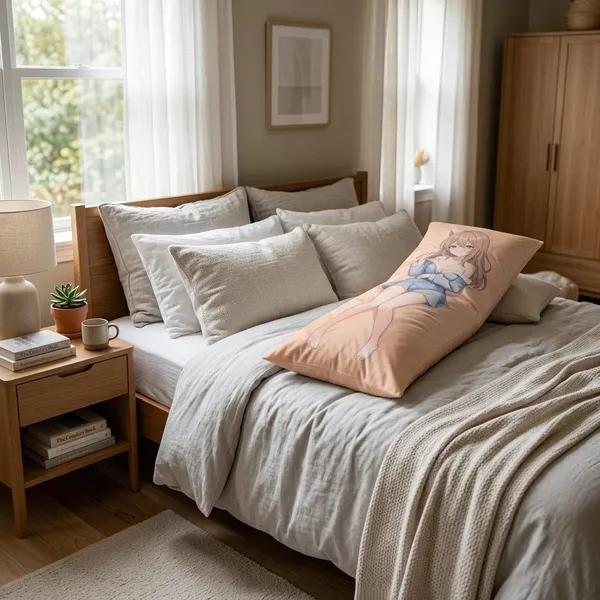
A dakimakura is a good buy when you choose it like a body pillow first and a collectible second: confirm what is included, pick a size that fits your bed and use, and avoid vague listings that hide fabric, print, or insert details. If you want daily comfort, spend more attention on the cover feel and insert quality; if you only want display value, print clarity and correct dimensions matter most. The purchase is easiest to regret when the artwork looks great but the practical parts were never checked.