Uzumaki is worth watching if you want a short, unsettling hit of Junji Ito atmosphere, but it is not the definitive version of the story. The anime's black-and-white look, sound design, and grotesque imagery are its strongest reasons to watch; the rushed four-episode structure and uneven animation are the reasons to keep your expectations grounded.
What Uzumaki Does Best
The anime works best when it stops trying to explain the spiral curse and simply lets it infect the screen. Its strongest moments are visual and sensory: hard shadows, warped bodies, droning music, and ordinary spaces that suddenly feel contaminated.
Haunting Black and White Visuals
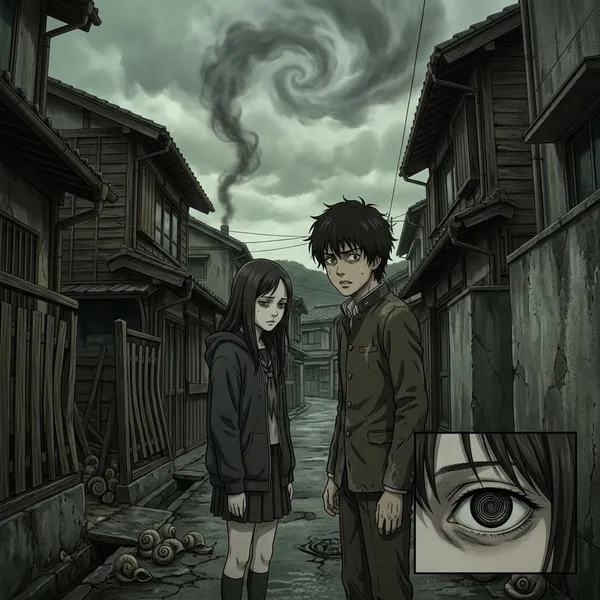
The monochrome style is the anime's smartest choice. Color would have made Uzumaki feel more conventional, while black and white keeps it close to Junji Ito's harsh linework and heavy contrast. Faces look colder, streets feel emptier, and spiral shapes stand out with an almost sickening clarity.
Episode 1 shows this at its best. Even quiet scenes have a severe, inked quality, so the town feels wrong before anything openly horrific happens. For manga readers, that visual loyalty is a major part of the appeal.
Disturbing Body Horror
Uzumaki is more disturbing than jump-scare scary. The horror comes from bodies being bent, stretched, twisted, and mentally overtaken by an idea they cannot escape.
- Watch with caution if you are sensitive to body distortion, self-harm themes, pregnancy horror, or grotesque transformation.
- Watch with interest if you like horror that feels invasive and surreal rather than loud or action-driven.
Oppressive Sound and Music
The sound design does a lot of the heavy lifting, especially when the animation is less convincing. Colin Stetson's score gives the town a constant pressure, using drones, uneasy textures, and silence to make scenes feel infected before the visuals fully escalate.
Strong Junji Ito Imagery
The adaptation understands that Ito's horror is not just about monsters. Hair, shells, stairways, storms, faces, and bodies all become part of the same visual obsession. When the anime trusts those images, it feels like a moving version of Ito's nightmare logic rather than a standard horror show with a creepy gimmick.
That does not make every scene equally successful, but it does give the series a distinct identity. Even viewers who come away disappointed may still remember several images long after finishing it.
Where Uzumaki Falls Short
The biggest problem is not that Uzumaki lacks good ideas. It has plenty. The problem is that the anime often moves too quickly and too unevenly to let those ideas fully take hold.
Uneven Animation
The animation drop after Episode 1 is hard to ignore. The premiere feels controlled and carefully staged, while later episodes can look stiffer and less fluid. In a story about spirals, warped movement, and impossible bodily changes, that matters more than it would in a quieter drama.
Rushed Four Episode Pacing
Four episodes are not enough to give the manga's escalation its full weight. Incidents arrive quickly, strange events pile up, and the town's collapse can feel more like a rapid montage of horrors than a slow tightening curse.
That short length does have one practical advantage: it is easy to finish in one evening. For a curious viewer who wants a compact horror experience, that is convenient. For someone hoping to feel the gradual dread of the manga, it is the anime's biggest compromise.
Limited Breathing Room
Horror needs pauses. Uzumaki often does not have enough of them. Kirie, Shuichi, and the town move from one grotesque event to the next so quickly that some scenes do not get time to settle.
A newcomer may feel this more than a manga reader. If you already know the story, you can mentally fill in the missing buildup. If this is your first exposure to Uzumaki, the compression can make the world feel chaotic before it feels truly suffocating.
Inconsistent Horror Impact
Some scenes are genuinely upsetting; others have a great concept but land with less force because the timing, movement, or transition is too abrupt. The anime is rarely boring, but it is not consistently frightening.
| If you care most about... | The anime will probably feel... |
|---|---|
| Mood, sound, and iconic imagery | Worth watching despite its flaws |
| Smooth animation from start to finish | Noticeably uneven |
| Slow-burn horror and character buildup | Too compressed |
| A quick introduction to Junji Ito's world | Useful, but incomplete |
How Well Does Uzumaki Adapt the Manga?
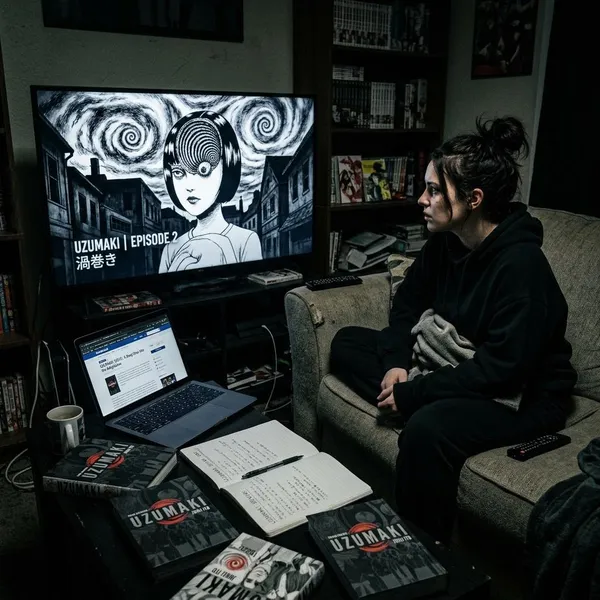
As an adaptation, Uzumaki is faithful in look and spirit but heavily compromised in rhythm. It clearly respects the manga's identity, yet it cannot reproduce the slow accumulation that makes the original so unnerving.
Keeps the Spiral Horror
The anime does preserve the main idea: the town is not fighting one monster, one ghost, or one clear villain. It is being consumed by a pattern that spreads through thought, desire, weather, architecture, and flesh.
That abstract threat is essential. The spiral feels frightening because it cannot be reasoned with or solved like a normal curse. Even in compressed form, the anime keeps that strange, inescapable quality.
Preserves the Manga Look
The black-and-white presentation gives the adaptation a real advantage over many horror anime. It respects the manga's dense shadows, sharp contrast, and grotesque compositions instead of smoothing everything into a safer modern style.
Individual frames often look right even when the animation around them is less convincing. For readers who mostly want to see Ito's drawings reimagined on screen, that may be enough to make the anime worthwhile.
Compresses the Story Heavily
The four-episode format forces the anime to shorten, combine, or rush through material. The major spiral incidents are still present, but the connective tissue between them is thinner.
This creates a clear split between audiences. Manga readers may appreciate the recognizable scenes while noticing what was cut. New viewers may understand the basic curse but miss the slower sense of inevitability that makes the source material so powerful.
Loses Some Gradual Dread
The manga feels like a long coil tightening around the town. The anime feels more like a series of vivid nightmares placed close together. That difference changes the emotional effect.
If you want maximum dread, read the manga. If you want a short visual version of the spiral curse and can accept a rougher pace, the anime still has value.
Who Should Watch Uzumaki?
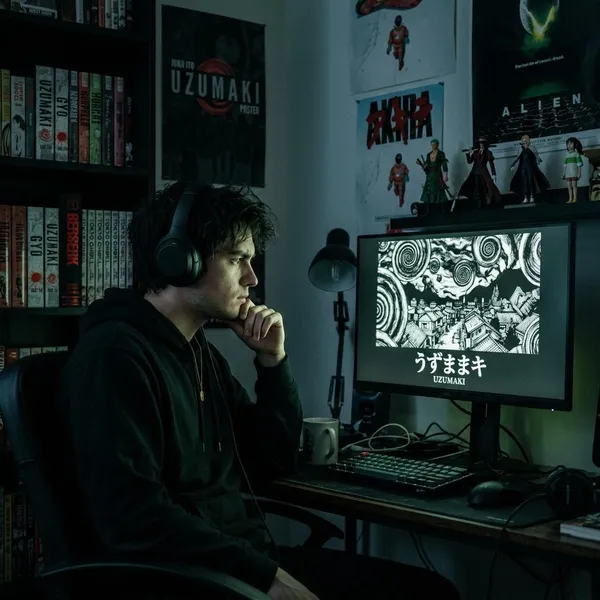
Uzumaki is easiest to recommend to viewers who already know what kind of horror they like. It is not a polished crowd-pleaser; it is a short, strange, visually committed adaptation with obvious flaws and several unforgettable moments.
Junji Ito Fans Who Want His Art in Motion
Junji Ito fans should probably watch at least the first episode. It gives the clearest sense of what the adaptation wanted to be: stark, eerie, and visually loyal to the manga.
For long-time readers, the best mindset is curiosity rather than completionism. Do not expect the anime to replace the manga. Treat it as a selective visual interpretation, and its strengths become easier to enjoy.
Horror Fans Who Enjoy Body Horror
Body horror fans are one of the safest audiences for this anime. The most memorable scenes are built around transformation, physical violation, and the fear of losing control over your own form.
This is also where personal tolerance matters. A viewer who enjoys unsettling imagery may find Uzumaki fascinating; a viewer who struggles with distorted anatomy or pregnancy-related horror may find it unpleasant in a way that is not fun.
Viewers Who Value Mood Over Pacing
If you often remember horror for its atmosphere more than its plot mechanics, Uzumaki has a better chance of working for you. The sound, monochrome visuals, and spiral imagery create a mood that survives even when the pacing stumbles.
Manga Readers Curious About the Adaptation
Manga readers may be the ideal audience because they can recognize both the care and the damage done by compression. The anime brings several famous images into motion, but it also removes some of the buildup that made those moments hit harder on the page.
If you have already read the manga, watch the anime as a comparison piece. If you have not, decide what you want first: the complete experience or the quickest introduction.
Conclusion
The best way to approach Uzumaki is to see it as a flawed but worthwhile horror adaptation, not as the final word on Junji Ito's manga. Watch it for the monochrome atmosphere, oppressive sound, and grotesque spiral imagery; read the manga if you want the stronger pacing and deeper dread. If your patience for uneven animation is low, the anime may frustrate you, but horror fans who value mood over polish will still find plenty to remember.