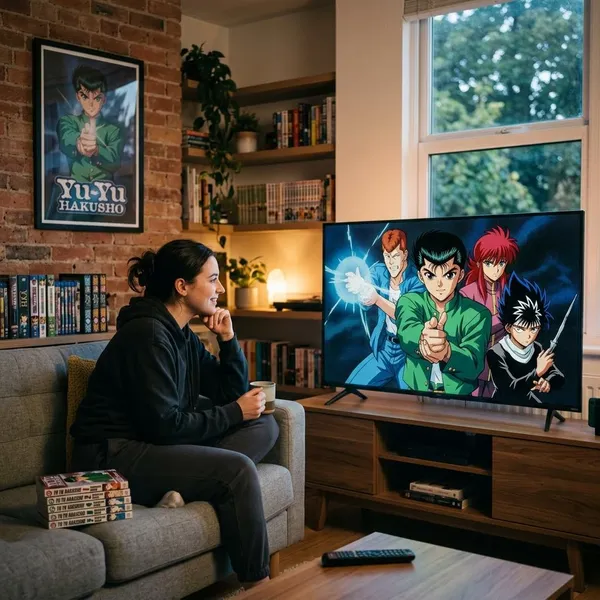
Yu Yu Hakusho is still worth watching if you want a battle shonen with real personality, not just a famous old name. The slow start and 1990s TV-anime look are real hurdles, but the cast chemistry, villains, and Dark Tournament give it more staying power than many newer shows with cleaner animation.
Why Yu Yu Hakusho Still Works Today
Yu Yu Hakusho holds up because its best material is built around people clashing, changing, and hurting each other emotionally. The powers get flashier over time, but the show rarely forgets that Yusuke, Kuwabara, Kurama, and Hiei are the reason the fights matter.
Yusuke Is a Strong and Flawed Lead
Yusuke works because he begins as a believable mess: angry, defensive, reckless, and not especially interested in being noble. His first heroic act matters because it cuts against how everyone, including Yusuke himself, expects him to behave.
That makes his growth more satisfying than a simple "weak to strong" arc. He becomes stronger, but the more interesting change is that he learns what responsibility costs without losing the sarcastic edge that makes him fun to watch.
Team Urameshi Has Excellent Chemistry
The main team avoids the problem of feeling like four character types standing in a line. Kuwabara gives the show heart, Kurama brings calm intelligence, Hiei adds danger and restraint, and Yusuke keeps the group blunt and unpredictable.
- If you like banter, the downtime scenes are often as enjoyable as the fights.
- If you prefer solo-protagonist action, this may be less immediate because the show's appeal is very ensemble-driven.
- If you value loyalty without constant speeches, Team Urameshi is one of the show's biggest reasons to stay.
The Villains Feel Personal
The stronger villains in Yu Yu Hakusho are not memorable only because they are dangerous. They tend to push against a character's pride, fear, guilt, or idea of strength, which makes the conflict feel closer than a simple good-versus-evil setup.
Toguro is the clearest case. He is frightening because he seems calm, certain, and emotionally damaged in a way the story gradually makes important. That gives his battles weight before the final blow is even thrown.
The Fights Balance Power and Strategy
The fights usually work best when they turn personality into tactics. Kurama wins through planning and patience, Hiei through precision and pressure, Kuwabara through stubborn heart, and Yusuke through instinct backed by force. That variety keeps many matchups from becoming just another exchange of bigger attacks.
Comedy Keeps the Cast Human
The comedy is not just decoration. The teasing, overreactions, insults, and awkward moments make the characters feel like people who know each other outside of combat. Kuwabara especially benefits from this, because his loudness becomes funny without reducing him to a joke.
Why the Dark Tournament Stands Out
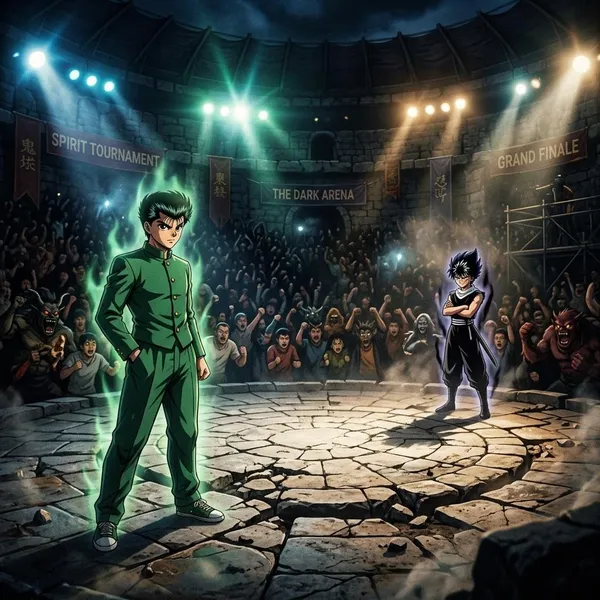
The Dark Tournament is where the series turns from a good supernatural action show into a shonen classic. It gives the cast a clear pressure cooker: dangerous opponents, team rules, personal grudges, and a final threat that feels emotionally unavoidable.
Every Fight Pushes the Characters
Most of the important matches are doing more than filling out a bracket. A good Dark Tournament fight exposes something: fear, arrogance, loyalty, a hidden ability, or a limit the character has been avoiding.
For a first-time viewer, this is the point where patience with the slower opening usually starts to pay off. The tournament has enough action to satisfy battle shonen fans, but it also has enough character pressure to keep the results from feeling mechanical.
Team Battles Give Everyone a Role
The team format matters because Yusuke cannot simply carry every problem alone. Different fights ask for different strengths, so Kuwabara, Kurama, and Hiei all get moments that feel tied to who they are rather than handed out for fairness.
Toguro Raises the Emotional Stakes
Toguro gives the arc its shape. He is not loud in the way many tournament villains are; his threat comes from how controlled and inevitable he feels. Every time he appears, the show seems to narrow toward one question: what does strength cost?
The Arc Builds Toward a Strong Payoff
The payoff works because the arc keeps raising both the physical and emotional cost. By the final stretch, the question is not only whether Team Urameshi can win, but what the win will mean for Yusuke and the people tied to Toguro's past.
- The stakes are easy to understand. The danger is clear early, so the tournament has momentum.
- The matchups change rhythm. Some fights are brutal, others tactical or psychological.
- The ending lands emotionally. The final conflict closes a theme, not just a scorecard.
Where Yu Yu Hakusho Shows Its Age
The series is absolutely a 1990s TV anime, and pretending otherwise would set new viewers up badly. The rough edges are not deal-breakers for everyone, but they do affect how quickly the show clicks if you mostly watch modern anime.
The Opening Takes Time to Build Momentum
The early episodes are more about Yusuke's death, return, and first Spirit Detective work than about major battles. If you are coming in because you have heard about the Dark Tournament, the beginning can feel smaller than expected.
Some Battles Move Slowly
A few fights use old-school pacing habits: repeated reactions, spoken explanations, and tension stretched across more scenes than necessary. The stronger matchups survive that because the emotional stakes are good, but not every battle is equally tight.
The Visuals Look Clearly 1990s
The hand-drawn look is both a strength and a barrier. Faces are expressive, the designs have identity, and certain dramatic shots still look great. At the same time, background detail, movement, and consistency can vary a lot from episode to episode.
- If you like cel-era anime, the texture will probably feel charming rather than dated.
- If you expect modern polish, the limited animation will stand out quickly.
- If style matters more than smoothness, the show still has plenty of visual personality.
The Final Stretch Feels Less Complete
The last part has interesting ideas, but it does not feel as fully shaped as the anime at its peak. It is still worth finishing if you are invested in the cast, but the journey is stronger than the landing.
Who Should Watch Yu Yu Hakusho
Yu Yu Hakusho is easiest to recommend to viewers who care about characters as much as fights. It is not the best pick if you want sleek animation, nonstop pacing, or a perfectly even final arc, but it is a strong choice if you want a battle shonen with personality and emotional bite.
Battle Shonen Fans
Battle shonen fans should try it, especially if they enjoy rivalries, training pressure, team fights, and tournament arcs. It also gives useful context for later shonen series, though it should not be watched only as homework; the best arcs still entertain on their own.
Supernatural Action Fans
The Spirit Detective setup gives the early show a ghost-story and demon-case flavor before the series becomes more combat-heavy. If you like supernatural rules mixed with street-level attitude, the first phase may actually appeal more than its reputation suggests.
The caveat is that it does not stay a case-of-the-week occult anime forever. Viewers looking for pure horror or mystery may find the later battle focus less distinctive.
Viewers Who Value Character Chemistry
This is probably the safest audience for the series. If you enjoy watching characters argue, test each other, and slowly build trust, Yu Yu Hakusho gives you plenty to hold onto between the big fights.
Fans of Older Hand-Drawn Anime
Fans of older hand-drawn anime are likely to be more forgiving of the uneven production. The show has that cel-era mood: bold expressions, sharp silhouettes, dramatic color choices, and a slightly rough texture that modern digital anime does not always recreate.
Patient Viewers Who Can Handle a Slow Start
If you can give the show time, it rewards you. A practical test is simple: if Yusuke, Kuwabara, and the early supernatural setup have not caught you at all after the first stretch, the later arcs may still impress you, but the full 112-episode commitment will feel heavier.
Conclusion
Yu Yu Hakusho is worth starting today if you can meet it halfway: accept the slower build and older presentation, and it gives you one of the most likable casts and strongest tournament arcs in classic shonen. It is not flawless, but its best moments still feel earned, emotional, and surprisingly sharp.