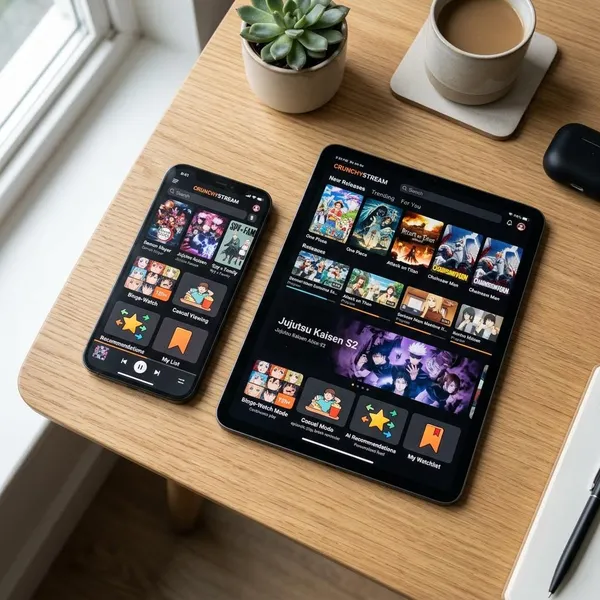
If you want anime with English subtitles or dubs, start with legal services that match your actual watchlist instead of chasing the biggest catalog claim. Crunchyroll is usually the best first stop for a broad anime library, while HIDIVE, Netflix, Hulu, Tubi, Pluto TV, and RetroCrush each make more sense for different viewing habits, budgets, and tastes.
Best anime streaming sites in English
The easiest way to choose is to split the services by what they are actually good at. A weekly anime fan needs a different setup from someone who only wants a free movie-night option or a few dubbed shows on the living-room TV.
| Service | Best fit | Main trade-off |
|---|---|---|
| Crunchyroll | Large anime library, seasonal shows, subs and many dubs | Some titles and dubs vary by region |
| HIDIVE | Niche titles, exclusives, curated dubs | Smaller overall catalog |
| Netflix | Mainstream anime in an app many households already use | Not built for deep seasonal anime browsing |
| Hulu | Familiar anime alongside general entertainment | Anime depth depends heavily on your region and plan |
| Tubi | Free on-demand anime | Ad-supported and less focused on new releases |
| Pluto TV | Free live-channel style anime watching | Less control over exactly what plays |
| RetroCrush | Classic and older anime | Not the place for most current seasonal hits |

Best sites for English-dubbed anime
For English dubs, do not judge a platform only by its total anime count. Check whether the shows you want have English audio in your country, whether the dub is easy to find in the player, and whether the app works well on the screen you use most.
Crunchyroll for variety and new dubs
Crunchyroll is usually the strongest starting point for dubbed anime because it combines a large anime catalog with many English audio options. It is also practical for households where one person wants subtitles quickly and another prefers to wait for a dub.
Availability is not identical for every title or region, so check the language menu before subscribing for one specific show. Still, for a single anime-focused service with broad dub coverage, Crunchyroll is hard to ignore.
HIDIVE for exclusives and niche dubs
HIDIVE is worth checking when your dub watchlist is more specific. It may not have the largest dubbed catalog by volume, but it can be the better match for exclusives, less obvious shows, and fans who want something outside the biggest franchises.
Netflix for accessible mainstream dubs
Netflix is one of the easiest dub-friendly options for casual viewers. The app is familiar, playback is polished, and language settings are usually simple enough for shared TVs, tablets, and family accounts.
It is strongest for mainstream titles, Netflix originals, and viewers who already pay for the service. If you want deep anime discovery, pair it with an anime-focused platform instead of relying on Netflix alone.
Hulu for familiar dubbed series
Hulu is a reasonable dub option if you mostly want familiar series and already use the service for other entertainment. It is less convincing as a dedicated anime subscription, but it can be a convenient bonus for casual or moderate anime viewers.
How to choose an English anime streaming site
Choose in this order: titles first, language second, budget third, then devices and region. That keeps you from paying for a service that looks impressive but does not actually solve your viewing problem.
Check your favorite titles
Search for five to ten shows before you subscribe. Include one current series, one older favorite, one movie if you care about films, and one less mainstream title. If the service misses the shows you were most excited to watch, the size of the rest of the library does not matter much.
- Weekly watcher: prioritize current releases and reliable subtitles.
- Casual viewer: a smaller catalog may be fine if it has familiar hits.
- Specific fan: check exact titles before trusting general recommendations.
Choose between subs and dubs
Subtitle-first viewers usually care about speed and breadth, especially for new anime. Dub-first viewers often care more about comfort, family viewing, or being able to watch while cooking, exercising, or relaxing away from the screen.
If you switch between both, look for a service where the language menu is clear and consistent. A large library becomes annoying fast if every episode makes you hunt for the right audio or subtitle setting.
Set your budget and ad limit
Free services are a good choice for occasional viewing, discovery, and older titles. Paid services make more sense when you watch several episodes a week, dislike ad breaks, or want a stronger chance of finding current shows in one place.
A sensible setup for many people is one paid anime service plus one free legal backup. Paying for three services only makes sense if your watchlist is genuinely split across them and you use each one often.
Confirm device support
Check the app on the device you actually use, not just the website. A service can look fine on a laptop but feel clumsy on a smart TV remote, streaming stick, or game console.
- TV viewers: test search, subtitles, and audio switching from the couch.
- Mobile viewers: look for stable playback and download options if offered.
- Shared households: check profiles, watch history, and parental controls if needed.
Check regional availability
Anime rights are licensed by region, so two viewers can open the same service and see different libraries. English subtitles and dubs may also vary by country.
Before paying for one specific anime, confirm it from your own location while logged into the service or browsing the local catalog. Brand reputation is useful, but your local library is what you will actually get.
Why legal anime sites are safer
Legal anime platforms are usually safer because they use official apps, clearer licensing, stable domains, and controlled ad systems. The benefit is not just avoiding risky pop-ups; it is also knowing where to log in, where your watchlist lives, and which app your family is actually using.
Official apps reduce security risks
Official apps from recognized app stores reduce the chance of fake play buttons, misleading download prompts, and suspicious permissions. This matters most on shared devices, where one bad click can affect more than one person.
For less technical users, the safest setup is also the simplest: install the known app, sign in through the official platform, and avoid sites that keep changing names or asking you to click through extra windows.
Clear licensing supports anime creators
Licensed services help fund distribution, subtitles, dubbing, and official access for international viewers. That is especially important for smaller titles, where legal demand can affect whether a show remains available outside Japan.
Stable domains protect account access
A stable platform protects your login, billing settings, profiles, and watch history. Unofficial sites can disappear, move, or be copied by lookalike pages, which makes them frustrating at best and risky at worst.
Fewer pop-ups improve viewing
Fewer pop-ups make streaming less stressful, especially on TVs, tablets, and family devices. Legal free services may still show ads, but the ads are usually part of the player rather than a maze of fake warnings, new tabs, or broken buttons.
Conclusion
The best choice is the service that covers your must-watch shows, your preferred language option, and the device you use most. Start with Crunchyroll if you want the broadest anime-focused option, consider HIDIVE for niche titles, use Netflix or Hulu for convenient mainstream viewing, and keep Tubi, Pluto TV, or RetroCrush in mind when free legal access is enough.