Gate is worth watching if the idea of modern soldiers, helicopters, rifles, and diplomacy colliding with a fantasy empire sounds fun to you. It is not the best choice if you want tense, balanced battles or morally complex military drama. The show works best as a stylish military fantasy power trip with enough politics and character comedy to keep it moving.
What Gate Does Best
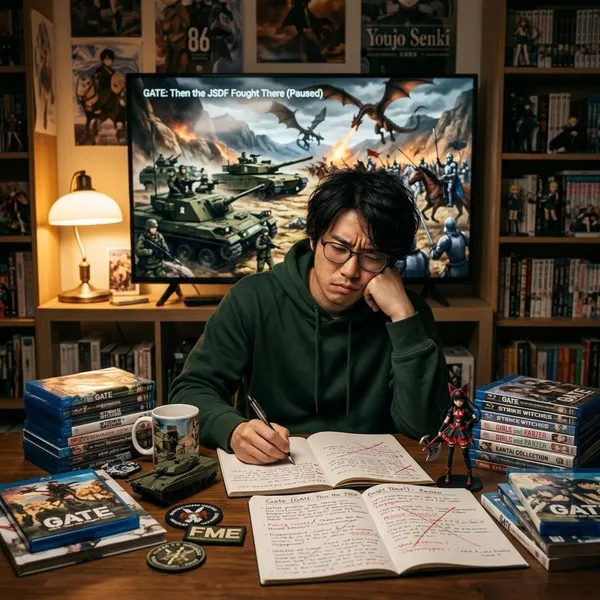
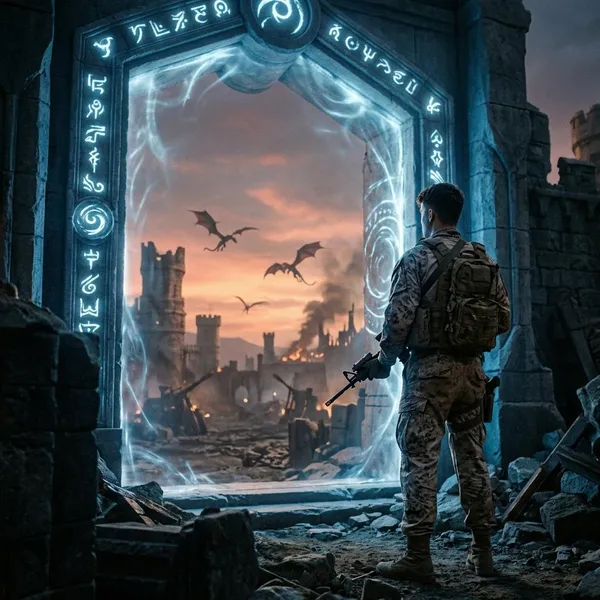
Gate: Jieitai Kanochi nite Kaku Tatakaeri has a hook that is easy to understand in one scene: a medieval fantasy force attacks modern Tokyo, and Japan responds by sending the JSDF through the portal. That setup gives the anime a stronger identity than many standard isekai shows, because the story is not about one overpowered hero falling into another world. It is about a modern state entering one.
Modern Military Meets Fantasy
This is the main reason to watch Gate. Tanks, helicopters, rifles, radios, field medicine, and modern logistics are dropped into a world of knights, dragons, nobles, and magic. The appeal is immediate because the two sides are not just visually different; they think about conflict in completely different ways.
Culture Clash Adds Variety
The culture clash keeps the show from becoming only a string of easy victories. People from the Special Region react to Japanese food, cities, medicine, transportation, media, and social norms with a mix of wonder, confusion, and fear. On the other side, the JSDF has to deal with imperial customs, slavery, noble privilege, religion, and political rules that do not fit modern expectations.
Itami Keeps the Story Light
Youji Itami is a smart choice for this kind of story because he does not act like a grand hero. He is relaxed, practical, and often more interested in keeping things manageable than making speeches. That makes him a useful anchor when the anime jumps from battlefield scenes to political briefings to comedy.
His casual personality also stops the show from feeling too stiff. A more intense lead might have made the military and political material feel heavy-handed. Itami gives the series a lighter rhythm, even when the plot around him is dealing with serious consequences.
Rory, Lelei, and Tuka Add Personality
Rory, Lelei, and Tuka give the fantasy side more texture. Rory brings confidence and scene-stealing energy, Lelei adds curiosity and a science-versus-magic angle, and Tuka gives the story a more fragile emotional thread tied to trauma and recovery.
Their development is not equally strong, and the show sometimes uses them for lighter fan-service beats when a scene could have stayed sharper. Still, they make the Special Region feel more personal. Without them, Gate would risk becoming too focused on institutions and military procedure.
Where Gate Falls Short
The biggest problem with Gate is that its strongest selling point also weakens its tension. The JSDF is so far ahead of most enemies that many fights feel decided before they begin. That can be satisfying if you came for power fantasy, but it is less effective if you want danger, sacrifice, or tactical uncertainty.
The other issue is focus. Gate wants to be military action, fantasy adventure, political drama, culture-clash comedy, and harem-adjacent character show all at once. That mix is part of its charm, but it also explains why some episodes feel scattered.
One-Sided Battles Reduce Tension
The early one-sided battles are entertaining because they clearly sell the premise: a fantasy army is not prepared for modern weapons and organization. After a while, though, the same imbalance can make combat feel less urgent. The question often becomes "how easily will the JSDF win?" rather than "can they survive?"
Pacing Slows Between Major Arcs
The pacing is uneven, especially between major action and political arcs. Some slower moments help the setting breathe, but others feel like the story is waiting for the next big incident.
This matters most if you are watching for a tight military thriller. If you are watching casually over a few evenings, the slower material is easier to forgive because the world and cast still have enough flavor. If you are binge-watching, the dips are more noticeable.
Too Many Side Characters
Gate introduces a lot of officers, nobles, diplomats, villagers, soldiers, royals, and foreign agents. That makes the world feel busy, but it also means some characters are more like plot functions than fully developed people.
- Good side effect: the setting feels larger than Itami's group.
- Bad side effect: emotional scenes sometimes arrive before the character has earned enough attention.
- Best expectation: enjoy the cast for color and momentum, not for deep individual arcs.
Harem Elements Pull Focus
Gate is not primarily a harem anime, but it does use harem-adjacent dynamics. Several female characters are drawn toward Itami, and the show occasionally leans into that for comedy, teasing, or fan service.
How Gate's Politics Shape the Story
Politics are a major part of why Gate is still discussed. The portal is not treated as a private adventure door. It becomes a national security event, a diplomatic problem, a military operation, and a resource question all at once.
The JSDF Is Shown as Highly Capable
The JSDF is portrayed in a very favorable way. Soldiers are disciplined, organized, restrained, and effective under pressure. For viewers who enjoy competent military action, that is part of the fun.
The tradeoff is that the show rarely digs deeply into institutional failure, moral ambiguity, or the messier side of military intervention. If you want something more skeptical, Gate will probably feel too polished. If you want a fantasy of order meeting chaos, the portrayal fits the tone.
Rival Powers Often Feel Simplified
Foreign governments and rival actors often work more as pressure points than fully layered political forces. They create tension, but they are not always written with the same care as the JSDF side.
A portal to another world would likely create complicated arguments over trade, intelligence, law, sovereignty, and military control. Gate touches some of that, then usually pulls the story back toward a clearer adventure shape. That keeps the show easy to watch, but it limits the political depth.
Military Power Fantasy Drives the Tone
The cleanest way to read Gate is as a military power fantasy with political decoration, not as a balanced geopolitical drama. That is not automatically a flaw. It simply tells you what kind of satisfaction the show is built to provide.
Who Should Watch Gate
Gate is easiest to recommend when expectations are set correctly. Watch it for the premise, the clash of military and fantasy logic, the lighter character moments, and the pleasure of seeing modern tools change the rules of another world. Be more cautious if you need balanced battles, tight pacing, or politically even-handed writing.
| Viewer situation | Likely reaction |
|---|---|
| You want modern weapons against fantasy threats | Very likely to enjoy it |
| You want a tense survival story | May find it too easy for the heroes |
| You like politics but not dense realism | Probably a good fit |
| You dislike harem-style distractions | Some scenes may annoy you |
Conclusion
Gate is worth watching if you want a distinctive military fantasy with a strong hook, likable character energy, and plenty of modern-versus-medieval contrast. Its flaws are clear: the battles often lack tension, the politics are idealized, and the cast can get crowded. Go in expecting a fun power fantasy with political seasoning rather than a hard-edged war drama, and the series is much easier to enjoy.