Gnosia is worth watching if you like mystery anime where the danger comes from doubt, bad reads, and repeated failure rather than constant action. The hook is simple—someone on the ship is not human—but the anime works because each loop changes what you think you know about the crew. If you want a gnosia anime review in practical terms: try it for its tense social deduction and character drama, but do not expect a straightforward action thriller.
What Gnosia is about
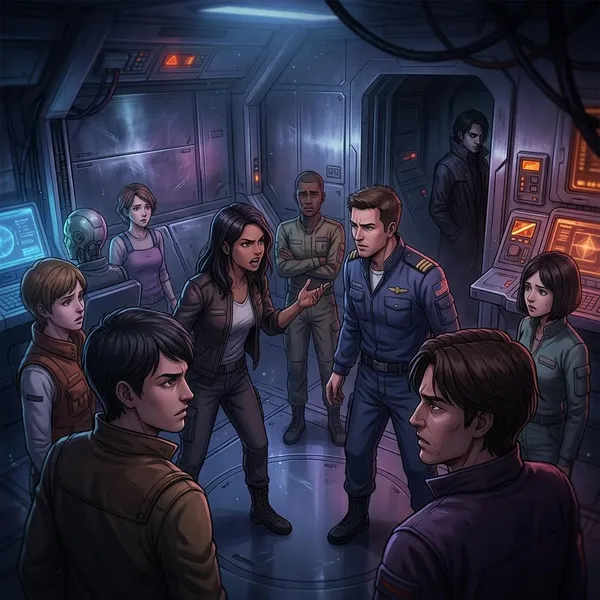
Gnosia follows Yuri, who is trapped in repeated loops aboard a spaceship where some crew members may secretly be Gnosia. The basic viewing question is easy: can Yuri identify the threat before the wrong people are removed from play? The harder question is whether trust can survive when each reset changes the roles, memories, and emotional stakes.
For anime-only viewers, the premise is not difficult to enter. Pay attention first to the meeting rules, then to who behaves differently from one loop to the next. The show is most rewarding when you treat conversations as clues, not filler between bigger plot events.
Yuri wakes aboard a spaceship with no memories
Yuri begins with no clear memory of how they arrived, which puts the viewer in the same unstable position. That amnesia setup could have felt ordinary, but the anime gives it immediate pressure: Yuri has to learn the rules while people around them are already making dangerous judgments.
This makes Yuri a useful lead for newcomers. They are not a perfect detective from the start, so early mistakes feel like part of the point rather than a writing flaw.
Hidden Gnosia threaten the human crew
The Gnosia are frightening because they do not stand apart visually from everyone else. The threat sits inside normal conversation, which means a calm answer, a nervous denial, or a sudden accusation can all matter.
If you are expecting obvious monsters or clear villains, this may feel quieter than expected. If you enjoy stories where the room itself becomes unsafe, the hidden-enemy setup is the anime's strongest hook.
Daily meetings decide who enters cold sleep
The crew's meetings are the main battlefield. Instead of fighting, characters argue, defend themselves, shift suspicion, and vote on who should be placed into cold sleep.
- Watch who starts accusations. Timing often says as much as the accusation itself.
- Notice who stays too quiet. Silence can be fear, strategy, or avoidance.
- Do not trust confidence alone. A convincing speaker is not automatically right.
Failed outcomes return Yuri to an earlier point
When a loop fails, Yuri returns to an earlier point, but the story does not become a simple retry puzzle. Roles and social pressure shift, so remembering one solution is not enough.
This is important for pacing. A weak loop story repeats the same path until the lead finds the correct button; Gnosia keeps changing the people around that button.
Each loop reveals new information and relationships
Every loop adds either a practical clue, an emotional clue, or both. A character who seemed harmless in one timeline may become dangerous in another, while someone suspicious may reveal a softer side when the conditions change.
What the Gnosia anime does exceptionally well
The anime works best when it turns repetition into pressure. It understands that a time-loop story needs more than reset mechanics; each return has to make the viewer reassess a person, a rule, or a previous assumption.
The main thing to check before deciding whether this is for you is your tolerance for dialogue-driven suspense. Viewers who want constant motion may find it slow in places, but viewers who like social pressure, shifting loyalties, and character-based mystery get much more out of it.
Changing roles keep the loops unpredictable
Changing roles are what stop the structure from becoming stale. A person who felt safe in one loop may become a liability in the next, not because their design changed, but because their position in the social game did.
Suspicion creates tension without frequent combat
Gnosia does not need many fights to feel tense. A wrong vote can be more damaging than a physical attack, because it shows how easily fear can turn the crew against the wrong person.
Small discoveries build into a larger mystery
The anime is good at making small details feel worth storing away. A line that sounds casual early on can become more meaningful once another loop reveals a different side of the same character.
That does not mean every scene is a hidden clue, and it is better not to watch with a checklist mentality. The more useful approach is to notice repeated patterns: who avoids pressure, who takes risks, and who changes when the room turns against them.
Emotional consequences survive the repeated resets
The resets do not erase the emotional weight for Yuri. Even when other characters move on without remembering, Yuri carries the memory of betrayals, deaths, kindness, and failed choices.
The story becomes more personal as it expands
As the rules and mysteries grow, the anime keeps returning to Yuri's connection with the crew. That personal anchor matters because plot-heavy sci-fi can easily become a wall of terms and explanations.
| Viewer type | What will probably work | Possible drawback |
|---|---|---|
| Mystery fans | Changing clues and shifting suspicion | Some answers arrive gradually |
| Character-drama fans | Relationships gaining weight across loops | The structure can feel fragmented at first |
| Action-focused viewers | Occasional bursts of danger and tension | Most conflict is verbal, not physical |
Why the characters keep the loops engaging
A loop story only works if the repeated cast is worth revisiting, and this is one of Gnosia's better qualities. The characters are not equally central all the time, but the ensemble has enough contrast to make each meeting feel different.
Yuri grows through repeated failure
Yuri's growth feels convincing because it comes through misjudgment. They become better at reading people, but the anime does not turn them into someone who can control every loop cleanly.
That keeps the character grounded. A less careful version of this story would make repeated failure feel like a game mechanic; here, it often feels like emotional wear.
Setsu gives the story emotional continuity
Setsu is the character who most helps the anime feel emotionally connected from loop to loop. Their presence gives Yuri something steadier to hold onto, even when the surrounding rules keep shifting.
Setsu also prevents the story from becoming only about strategy. Scenes involving them often carry the question that matters underneath the mystery: what does it cost to keep trusting someone when the world keeps resetting?
SQ brings uncertainty and sudden shifts
SQ is useful because she is hard to reduce to one simple function. She can change the temperature of a scene quickly, sometimes making a loop feel playful, uncomfortable, or dangerous within a short span.
That unpredictability is not just decoration. In a social deduction story, characters who are too easy to read weaken the premise; SQ keeps the viewer from getting too comfortable.
Gina adds warmth and vulnerability
Gina brings a softer emotional contrast to a story built around suspicion. Her sincerity can make a scene feel briefly safe, which also makes later doubt or danger hit harder.
The wider crew changes every social dynamic
The broader cast keeps the meetings from feeling like copies of each other. A loop led by forceful personalities feels very different from one where quieter characters shape the mood through hesitation or avoidance.
- Strategic viewers get more variables to track in each vote.
- Character-focused viewers get different emotional pairings across loops.
- Casual viewers may need a few episodes before names and patterns fully settle.
How direction and sound strengthen the mystery
The adaptation could have become visually flat because so much depends on talking, voting, and reading reactions. Its direction and sound design help solve that problem by treating conversations like suspense scenes.
Instead of trying to turn every moment into spectacle, the anime uses controlled framing, recognizable designs, vocal nuance, and restrained music to keep the pressure alive. That is the right choice for this kind of story.
Visual staging makes discussions feel tense
The meeting scenes work because the camera often shows pressure moving through the room. Close-ups, pauses, and shifts in focus help signal when a character is gaining influence or losing control.
Distinct designs keep the large cast recognizable
The character designs are not only stylish; they are functional. In a story where roles and trust levels change repeatedly, recognizable silhouettes and faces make the cast easier to track.
This matters most for anime-only viewers. If the designs were too similar, the loop structure would become confusing much faster.
Voice performances reveal trust and deception
The voice work carries a lot of the adaptation's value. A small hesitation, an overconfident denial, or a suddenly softer delivery can change how a scene reads.
That is one advantage the anime has over a purely text-based experience. Even when interactivity is reduced, performance gives the viewer another layer to judge.
Music supports both suspense and melancholy
The music helps connect the anime's two moods: paranoia during the deduction scenes and sadness during the quieter aftermaths. It usually supports the tension without smothering the dialogue.
That restraint is important. A louder, more dramatic score might have made the loops feel artificial; the better cues let uncertainty linger.
Conclusion
Gnosia is easiest to recommend to viewers who like tense conversations, shifting character roles, and mysteries that become more emotional as they unfold. It is not the best pick if you want fast action or a simple villain hunt, but its mix of social deduction and accumulated memory gives it a distinctive pull. Watch it with enough attention to follow the small changes, because that is where much of its payoff lives.