A Silent Voice is worth watching if you want a serious anime drama about guilt, bullying, disability, and the hard work of reconnecting after harm has been done. It is beautiful and deeply empathetic, but it is not a light comfort watch. The best way to approach it is as an emotional character film first, with romance and school-life elements sitting in the background.
Is A Silent Voice worth watching?
Yes, but the answer depends on what kind of viewing experience you want. If you are looking for a gentle anime movie to relax with, this may feel heavier than expected. If you want a film that treats regret, shame, and empathy with real seriousness, it is one of the strongest choices in modern anime film.
- Best match: viewers who like slow, emotionally intense character drama.
- Worth pausing: if bullying or self-harm themes are too raw right now.
- Wrong expectation: watching it as a simple romance or feel-good school story.
Yes for emotionally intense character drama
The film works best when you are ready for quiet emotional pressure rather than big plot twists. Its strongest scenes often come from hesitation: a character failing to speak, avoiding eye contact, or trying to bridge a silence that has lasted for years.
Best for viewers who value empathy and redemption
A Silent Voice asks whether someone who caused real pain can still choose to change. It does not excuse Shoya's childhood cruelty, but it also refuses to freeze him forever as only "the bully." That balance is where the film gets much of its emotional force.
Shoko is just as important to that balance. She is not treated as a device for Shoya's redemption. Her kindness, self-blame, loneliness, and emotional limits give the story a second wounded center, not just a moral lesson for him.
Less suited to anyone avoiding heavy themes
This is not the movie I would recommend to someone who wants a light anime romance, a relaxing weekend watch, or background viewing. The bullying scenes are uncomfortable, and the later mental health material can hit hard. Mature viewers may find the honesty rewarding, but younger viewers or anyone currently sensitive to these themes should approach it carefully.
What A Silent Voice is about
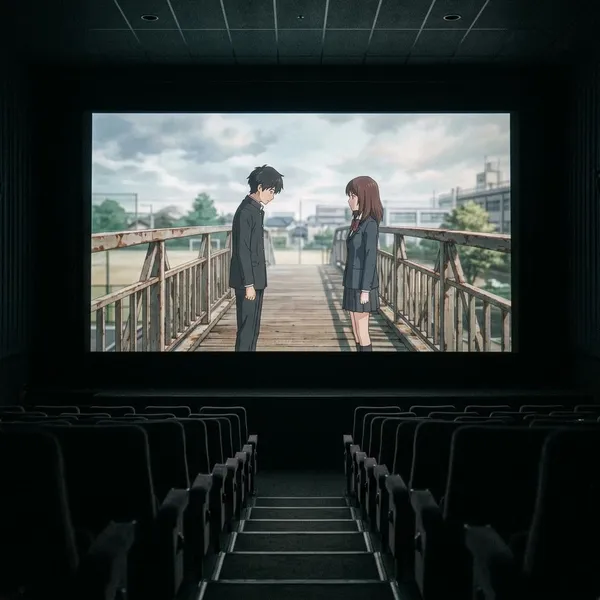
A Silent Voice follows Shoya Ishida, a boy who bullied his deaf classmate Shoko Nishimiya when they were children. Years later, isolated and ashamed, he seeks her out after learning sign language. The story then becomes less about whether he can apologize and more about whether either of them can live with the damage left behind.
That focus matters. The film is not built around revenge, punishment, or one dramatic confession that fixes everything. It is about consequences: the things people carry, the ways groups avoid blame, and the slow difficulty of learning to face another person honestly.
Shoya faces the consequences of childhood bullying
The opening does not soften what Shoya did. Shoko's deafness becomes a target for classroom cruelty, and the film shows how easily a group can turn one child's difference into entertainment. That makes the later story harder to watch, but also more believable.
Years later, Shoya's punishment is not only social rejection. It is the way he has come to see himself as someone unworthy of connection. The film's point is not that his suffering cancels out Shoko's pain, but that cruelty can deform everyone around it in different ways.
Shoko reenters his life years later
When Shoko comes back into Shoya's life, the reunion is awkward rather than cathartic. He has learned sign language and wants to apologize, but effort does not erase memory. Her presence gives him a chance to act differently, while also forcing both of them near wounds that were never cleanly closed.
Reconciliation becomes a difficult path forward
Reconciliation in the film is slow, uneven, and often uncomfortable. Other classmates, family members, and old social patterns keep interfering, which makes sense: bullying was never only a private event between two people.
- Trust takes time: one apology cannot repair years of harm.
- Group guilt matters: bystanders and former friends shape the aftermath too.
- Good intentions are not enough: characters still misread, avoid, and hurt each other.
The story focuses on healing rather than punishment
The film is more interested in repair than in deciding who deserves to suffer. That may frustrate viewers who want a sharper moral reckoning, but it is also what makes the story feel mature. It asks what people do after the worst thing has already happened, when punishment alone cannot give anyone a life back.
What A Silent Voice does exceptionally well
The film's biggest strength is how carefully it turns emotion into behavior. Naoko Yamada's direction pays attention to hands, posture, silence, distance, and small failures of communication. Kyoto Animation's visual polish is obvious, but the beauty rarely feels empty; it supports the characters' inner lives.
Shoya receives a convincing redemption arc
Shoya's redemption works because the film does not rush to make him lovable. He starts from a genuinely ugly place, and the audience is allowed to remember that. His change comes through repeated discomfort: learning sign language, showing up, failing, trying again, and facing people who have every reason not to trust him.
More importantly, redemption is not treated as a reward handed to him by others. The meaningful shift is that he begins to stop running from responsibility and stop treating his own life as disposable.
Shoko has emotional depth beyond her deafness
Shoko's deafness shapes how people treat her, but it does not define the whole character. She is gentle, lonely, self-blaming, and often too willing to make herself smaller so others will not feel uncomfortable. That pattern gives her kindness a painful edge.
This is where the film avoids one of the easiest mistakes in disability-focused stories. Shoko is not just an inspirational figure or a symbol of innocence. She has her own inner damage, and the film is strongest when it lets that complexity show.
Guilt and isolation feel painfully believable
The X marks over people's faces are a simple but effective visual idea. They show how Shoya's shame changes the world around him: people become impossible to face, ordinary conversations become threats, and connection starts to feel unreachable before anyone even rejects him.
Quiet moments carry genuine emotional weight
Some of the film's most memorable scenes are built from tiny gestures rather than speeches. A hand movement, a pause on a bridge, or a character looking away can say more than a long explanation. That quietness suits a story about people who cannot easily say what they mean.
Where A Silent Voice falls short
The film's main weakness is compression. It adapts a longer manga into a single feature, and the central story survives that process better than the supporting cast does. Shoya and Shoko receive the emotional space they need, but several side characters feel like they belong to a wider version of the story.
Supporting characters receive uneven development
Some side characters, especially Yuzuru and Nagatsuka, make a strong impression because their roles are clear. Others seem important to the film's ideas about blame and group responsibility, but they do not always get enough time to feel fully understood.
The issue is not that these characters are useless. It is that their emotional weight sometimes depends on context the film only has room to imply.
Some relationships change too quickly
A few relationship shifts in the second half happen faster than the surrounding drama deserves. Hostility softens, trust returns, or group dynamics change in ways that make sense thematically but feel slightly underbuilt emotionally.
The manga's wider story feels compressed
The movie makes a sensible choice by focusing on Shoya and Shoko, but that choice has a cost. The manga has more room for motivations, aftermath, and side-character complexity. If you finish the film wishing certain classmates had been challenged more directly, the manga is likely to satisfy that curiosity.
This is also the main reason I would not call the film flawless. Its emotional core is powerful, but the edges of the story sometimes feel trimmed a little too tightly.
Certain conflicts end without enough reflection
Several confrontations raise difficult questions about responsibility, resentment, and denial, then move on before the emotional fallout has fully settled. The film remains moving, but a few scenes could have used one more beat of reflection instead of another step toward resolution.
How the film handles its difficult themes
A Silent Voice handles its hardest themes with more care than many school dramas. Bullying is not treated as a brief childhood mistake, disability is not reduced to a teaching tool, and social anxiety is not played as cute awkwardness. The film keeps returning to the same uncomfortable truth: people often fail each other long before they know how to name the damage.
That seriousness is why viewer context matters. Watching it alone as an emotional drama is very different from showing it to a younger sibling or a classroom. The film can open up useful conversations, but it is not soft material, and some viewers may need a warning before going in.
Bullying has lasting consequences
The film understands bullying as a long-term injury, not a bad school memory everyone naturally outgrows. Shoko carries the hurt of being targeted, while Shoya carries guilt and self-disgust. The wider class carries its own mix of denial, defensiveness, and selective memory.
That wider view is important because it avoids a simple "bad bully, good victim" structure. The film still knows who caused harm, but it also shows how groups make cruelty easier and accountability harder.
Communication barriers affect every relationship
Shoko's deafness makes communication barriers visible through sign language, notebooks, lip-reading, and misunderstanding. But the larger problem belongs to nearly everyone. Characters avoid honesty, speak through anger, hide behind politeness, or assume the worst because being direct would make them vulnerable.
Social anxiety shapes how characters see others
Shoya's anxiety affects the film's entire visual language. Faces are blocked, eye contact feels impossible, and crowded spaces become emotionally suffocating. The movie is not just saying he is lonely; it shows how loneliness changes what he believes other people are allowed to be to him.
That portrayal is one reason the film connects so strongly with viewers who have dealt with shame or withdrawal. It captures the habit of rejecting yourself before anyone else gets the chance.
Conclusion
A Silent Voice is worth watching if you want an anime film that is humane, painful, and emotionally precise rather than easy. Its compressed side stories keep it from being perfect, but its central portrait of guilt, communication, and fragile healing is strong enough to stay with you. Watch it when you are ready for difficult material, not when you simply want something sweet.