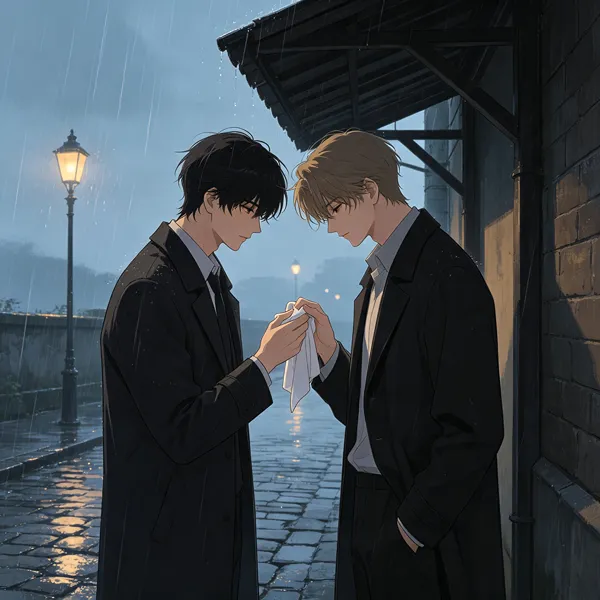
Death Note is still worth watching if you want a tense psychological thriller built on mind games rather than action scenes. It is especially easy to recommend to first-time anime viewers because the premise is clear almost immediately, but it works best if you enjoy strategy, moral pressure, and characters trying to outthink each other.
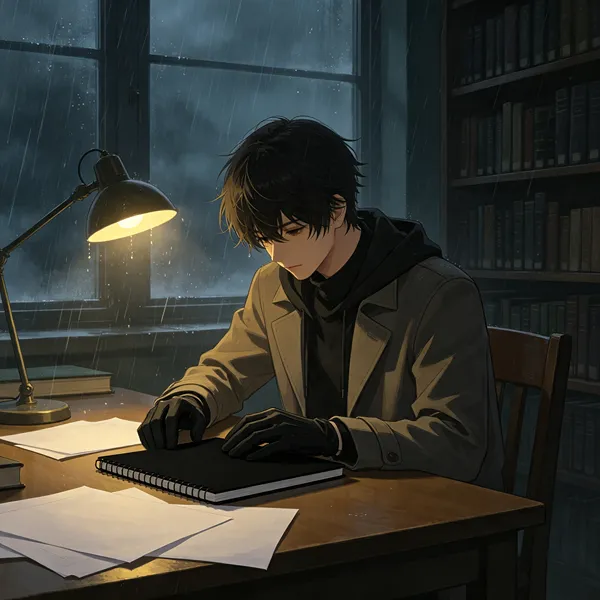
Is Death Note worth watching?
Yes, Death Note is worth watching for most viewers who like dark thrillers, detective stories, or morally messy character conflicts. The first episode gives you the core hook quickly: a brilliant student gains the power to kill from a distance, and an equally brilliant detective begins closing in on him.
Yes for psychological thriller fans
Thriller fans are the safest audience for Death Note. The show creates pressure through surveillance, hidden motives, risky assumptions, and small decisions that can expose a character's entire plan.
Best for viewers who enjoy mind games
Death Note is at its strongest when it turns ordinary details into traps: a broadcast, a name, a schedule, a hidden page, or a carefully worded statement. The pleasure is not just seeing who wins, but noticing how each side tries to control what the other person believes.
- Good fit: you enjoy deduction, manipulation, and strategic reversals.
- Maybe not: you dislike long internal reasoning or characters explaining their plans.
- Best viewing mood: when you can pay attention instead of half-watching in the background.
Accessible for anime beginners
For beginners, Death Note is one of the easiest anime to start with because it does not require genre knowledge or a long franchise commitment. At 37 episodes, it is long enough to build a serious story but short enough to finish without feeling like a project.
The main caution is tone. A new anime viewer who likes crime thrillers, serial-killer stories, or darker prestige dramas will probably adjust quickly. Someone looking for a lighter first anime may be better off starting elsewhere.
What Death Note is about
Death Note follows Light Yagami, a gifted student who finds a supernatural notebook with a terrifying rule: write a person's name while knowing their face, and that person dies. Instead of treating it as a curse or a mistake, Light decides he can use it to create a better world.
That choice turns the story into more than a supernatural crime plot. It becomes a contest over justice, control, ego, and whether any person can be trusted with absolute power.
Light discovers a notebook that can kill
The setup is quick and effective. Light finds the notebook after it is dropped into the human world by Ryuk, a shinigami who is more entertained than concerned by what happens next. Once Light confirms the notebook works, the story stops asking whether the power is real and starts asking what kind of person Light becomes when no ordinary rule can stop him.
Kira begins judging criminals
Light begins by killing criminals and framing his actions as justice. That is the first major warning sign: he does not simply want to punish people who escaped the law; he wants the world to recognize a new authority.
The public response makes the premise more unsettling. Some people fear Kira as a murderer, while others support him because visible punishment feels immediate and effective. That split gives the anime one of its strongest ideas: people may accept cruelty if it promises order.
L leads the hunt for Kira
L changes the entire shape of the series. Before he appears, Light mostly acts from a position of secrecy and control. Once L enters the case, Light has a real opponent who can pressure him without needing traditional evidence right away.
Their battle turns into a test of strategy
The central conflict becomes a chess match built around information. Light needs to keep killing while hiding his identity; L needs to prove what seems impossible without revealing too much of his own hand.
This is where Death Note becomes addictive. A small mistake can change the whole investigation, and a casual scene can secretly be a test. The best episodes make you feel as if both characters are one thought away from winning or losing everything.
What Death Note does exceptionally well
The series works because it understands its own strengths. It does not need constant battles or huge fantasy worldbuilding; its tension comes from rules, suspicion, and the frightening confidence of people who think they are smarter than everyone else.
For a first-time viewer, the biggest strengths to watch for are the Light-and-L rivalry, the rule-based plotting, and the way the show keeps turning moral arguments into personal power struggles.
Constant tension and clever reversals
Death Note is very good at making a scene feel safe and then revealing that it was dangerous all along. A plan may look successful until one hidden detail changes what the audience thought it understood.
The reversals usually work because they grow out of character. Light takes bold risks because he is arrogant and ambitious. L sets traps because he is patient, suspicious, and comfortable making people uncomfortable. The twists feel strongest when they expose those traits rather than simply shocking the viewer.
A compelling conflict between Light and L
The Light and L dynamic is the reason many people remember the anime so strongly. Their conflict is not just "killer versus detective"; it is two proud, isolated minds trying to prove that their view of justice is the one that should control the world.
Clear rules that shape each plan
The Death Note's rules make the mind games easier to follow. Names, faces, timing, causes of death, memory loss, and the shinigami eye deal are not random decorations; they shape what characters can and cannot do.
- Rules create limits: Light cannot simply do anything he wants without conditions.
- Limits create suspense: every plan depends on timing, proof, and risk.
- Risk reveals character: the way each person uses the notebook says something about fear, ambition, or loyalty.
Moral questions without simple answers
The anime is clear that unchecked killing becomes tyranny, but it still understands why Kira's rise tempts people inside the story. Crime appears to fall, punishment feels immediate, and frightened citizens begin treating fear as safety.
Dramatic direction and memorable music
Madhouse gives the anime a theatrical style that fits the material. Close-ups, shadows, sharp cuts, and exaggerated reactions make internal thought feel dramatic instead of static.
The music does a lot of work too. Ominous choral cues and character themes make deductions feel heavier than they would on the page. The style can be over the top, but for this story, that intensity is part of the appeal.
Where Death Note falls short
Death Note deserves its reputation, but it is not flawless. The main weaknesses are easy to name: some side characters are underused, a few plans depend on convenient outcomes, and the later stretch does not have the same spark as the strongest Light-and-L episodes.
These problems do not make the anime hard to recommend. They do matter, though, if you are going in after hearing that it is perfect. It is better to expect a gripping series with an uneven back half than a thriller that never drops in intensity.
Supporting characters receive uneven development
Some supporting characters add real weight, especially when they show the human cost of the Kira investigation. Soichiro Yagami, Matsuda, and Naomi Misora each bring a different kind of pressure to the story.
Others feel more limited. Misa Amane is important to the plot, but her role often depends too heavily on her devotion to Light. Later characters can also feel more like strategic pieces than fully developed people. In a story about society, justice, and fear, that unevenness is noticeable.
Some plans rely on convenient outcomes
Most of the plotting is clever enough to be satisfying, but not every move feels airtight if you pause and examine it closely. Sometimes a reaction is too helpful, a timing detail is too neat, or a character's decision serves the plan more than their own common sense.
Explanations occasionally slow the tension
The detailed explanations are both a strength and a weakness. They help viewers understand complicated traps, but they can also slow a scene that would hit harder with less narration.
The later story lacks the same intensity
The most common criticism is fair: after a major turning point, the story loses some of the intimacy that made the earlier rivalry so electric. The new opposition still matters, but it does not create the same chemistry.
Near and Mello bring different methods, and the ending still has thematic purpose. Even so, the later arc feels more procedural and less personal. For many viewers, that does not ruin the anime; it simply means the first half sets a standard the second half cannot fully match.
The themes behind Death Note
The reason Death Note still feels relevant is that its core ideas are not tied to one era. It is about what happens when punishment becomes performance, justice becomes personal control, and public fear starts to look like public approval.
The most important thing to notice is how quickly Light's language changes. He begins by talking about cleaning up the world, but his actions increasingly focus on protecting his status as Kira. The gap between those two things is the heart of the series.
Justice becomes a form of control
Light's version of justice depends on one person acting without oversight. At first he targets criminals, but the category expands once anyone threatens his power. That shift is the point: when justice has no limits, it becomes private rule.
Power exposes Light's true ambitions
The notebook does not turn Light into someone else. It removes the normal barriers that kept his arrogance theoretical. Once he has power, he wants more than a safer society; he wants obedience, recognition, and the role of a godlike author of the future.
Pride drives both strategy and failure
Pride gives Death Note much of its energy. Light and L are compelling because they are brilliant, but they are also dangerous because they trust their own reasoning so completely.
That pride makes their strategies bold and entertaining. It also creates blind spots. Light's need to prove superiority is especially important because he often takes risks not only to survive, but to win in a way that confirms his own greatness.
Fear changes how society views Kira
Kira's influence spreads because fear changes behavior before it changes belief. People may not fully trust him, but many begin acting as if his judgment is unavoidable.
That is one of the anime's sharpest social observations. A society does not need to love an authoritarian figure to adapt around him. Sometimes fear, convenience, and the promise of order are enough.

Conclusion
Death Note remains an easy recommendation if you want a dark, smart thriller with a strong hook and one of anime's most memorable rivalries. It is not the best choice for viewers who want a gentle tone or perfectly even pacing, but for suspense fans, anime beginners with darker tastes, and anyone who likes mind games, it still holds up better than most gateway series.