Netflix's devil may cry anime review is easy to summarize: Season 1 is worth watching if you want stylish demon-slaying action, but it is not the cleanest or most balanced adaptation. The fights, music, and voice cast carry a lot of the experience, while the writing can feel blunt, over-explained, and occasionally too eager to sound edgy. Game fans should expect a bold reinterpretation rather than a careful one-to-one version of Capcom's series.
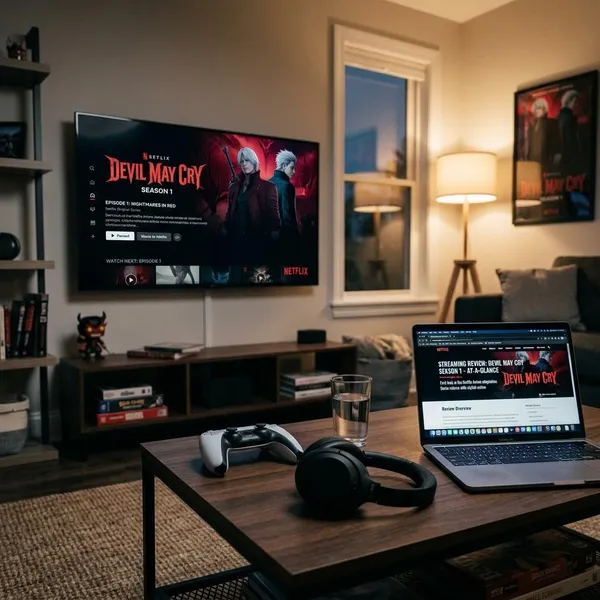
Devil May Cry at a glance
Season 1 works best when you judge it as a loud, fast, TV-MA action anime with Devil May Cry DNA. If your priority is combat style, atmosphere, and Dante's attitude, the show gives you plenty to enjoy. If you mainly want sharp dialogue, careful pacing, or strict game faithfulness, the weaker parts will stand out sooner.
Released on Netflix in 2025
The anime arrived on Netflix in 2025, which matters because animated game adaptations now face tougher expectations. Viewers are no longer satisfied with name recognition alone; the show has to look confident, move well, and give casual subscribers a reason to keep watching. On that front, Devil May Cry makes a strong first impression through style before its story fully settles.
Eight episodes
The eight-episode length makes Season 1 easy to binge, especially over a weekend. The trade-off is that slow setup feels more costly. If an early episode spends too much time explaining factions or motives, there is not much room for the season to hide it.
- Good fit: viewers who want a compact action season without a long commitment.
- Less ideal: viewers who need every character arc to breathe slowly and fully.
Created by Adi Shankar
Adi Shankar's influence shows in the aggressive tone. The series is not trying to be quiet, polished, or especially safe; it wants to feel violent, rebellious, and modern. That gives the anime personality, but it also makes the rougher jokes and profanity harder to ignore when they miss.
Animated by Studio Mir
Studio Mir is one of the biggest reasons the season works. The studio gives the action clear motion, strong poses, and readable impact, so fights rarely dissolve into visual noise. Even when the script is uneven, the animation often reminds you why Devil May Cry can work so well in anime form.
Based on the Capcom games
The show draws from Capcom's games without feeling like a direct retelling. Dante's swagger, demon-hunting style, gothic world, and family tension are all present, but the anime also updates the tone in ways that may split longtime fans. Newcomers can follow the basic conflict, while purists may spend more time comparing the mood, dialogue, and character choices against the games.
Rated TV-MA
The TV-MA rating is earned through violence, harsh language, and a generally abrasive edge. That fits the darker side of the franchise, but it is not automatically a strength. If you enjoy adult animated action with bite, the rating helps the show feel unfiltered; if repeated profanity pulls you out of a scene, this may be one of your main complaints.
Action and animation
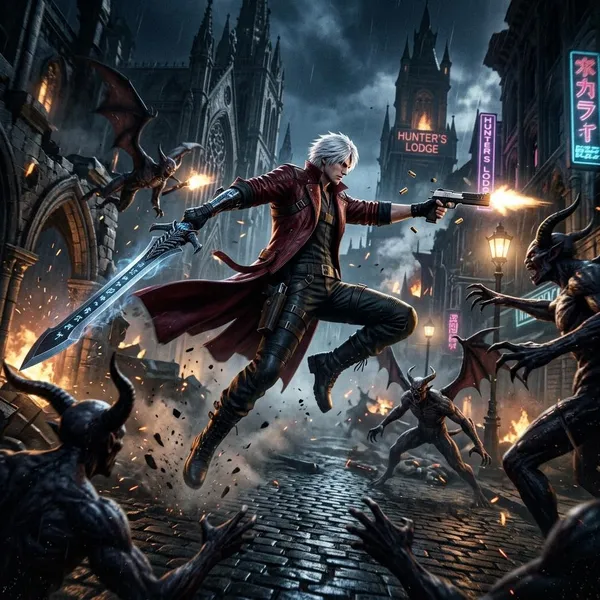
The action is the safest reason to recommend the anime. Before worrying about lore, politics, or adaptation choices, check whether the fights click for you. If the first couple of combat scenes feel exciting rather than noisy, the season's biggest strength is already doing its job.
Combat scenes move with energy
Combat has real momentum. Dante and the demons do not simply stand opposite each other trading attacks; they reposition, rush, counter, and use the frame in ways that keep scenes alive. The best fights feel like performances, which is exactly the right instinct for Devil May Cry.
Dante's fighting style feels playful
Dante's personality comes through most clearly in motion. He fights with confidence, looseness, and a slightly mocking rhythm, so the animation often sells him better than the dialogue does. For game fans, this is one of the most important checks: Dante may not always get the sharpest lines, but he usually moves like Dante.
Gothic visuals support the atmosphere
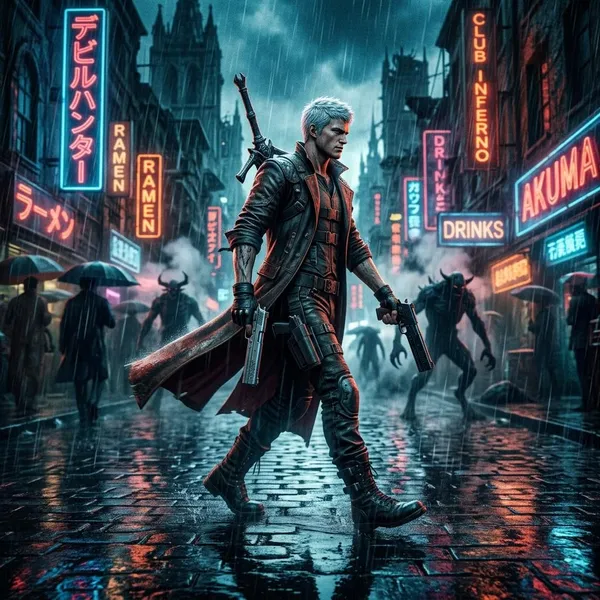
The gothic look gives the anime a stronger identity than a generic demon-action setting would have. Dark interiors, religious imagery, heavy shadows, and urban decay all support the sense that this world is stylish but damaged. It is especially useful during slower scenes, where the visuals keep the mood alive even when the writing is doing more explaining than necessary.
The soundtrack strengthens the action
The soundtrack helps the fights feel bigger and more playful. Devil May Cry needs music with attitude, because the action is not only about danger; it is about rhythm, swagger, and impact. When the music locks in with the editing, even a simple fight feels more memorable.
Some CGI looks less polished
The main visual weakness is the CGI, especially when certain demons appear less integrated than the hand-drawn action around them. It does not ruin the season, but it can reduce tension in scenes where a monster should feel heavier or more threatening. Animation-sensitive viewers will notice this more than casual viewers who are mainly there for the pace and spectacle.
Story and pacing
The story is clear enough to follow, but not always elegant in how it delivers information. The season has a straightforward central conflict, some broader political ideas, and a stronger emotional pull near the end. The practical advice is simple: do not judge the entire season only by the early exposition, but do not expect the writing to become flawless either.
The central conflict is easy to follow
Newcomers should be able to understand the main stakes without studying the games first. The anime introduces demons, power struggles, and Dante's role plainly enough that the plot rarely becomes confusing. Some references will mean more to fans, but basic comprehension is not the barrier.
Early exposition slows the momentum
The opening stretch explains more than it needs to, and that slows a show that should feel instantly sharp. A few scenes would have worked better if the anime trusted the audience to learn through action, character behavior, or visual clues. If you are trying the show and feel impatient early on, give it a little room, but do not expect the exposition style to disappear completely.
Political themes expand the story
The political material makes the world feel larger than a simple demon hunt. It adds institutions, agendas, and social pressure around the supernatural conflict. The idea is worthwhile, though the blend is uneven: viewers who want more world-building may appreciate the ambition, while viewers mainly here for Dante, Vergil, and stylish violence may feel the show occasionally drifts from its strongest lane.
Humor and profanity divide viewers
This is where reactions may split hardest. Dante needs wit, and the series clearly wants a rough adult edge, but profanity sometimes becomes a shortcut for intensity. The humor lands best when it comes from timing or confidence; it works less well when a scene seems afraid to let silence, sincerity, or tension carry the moment.
The final episodes raise the emotional stakes
The back half gives the season more weight. Once family history, personal pain, and larger consequences move closer to the center, the anime starts to feel more connected to the deeper appeal of Devil May Cry. It does not erase the early pacing issues, but it makes the season easier to recommend as a complete watch rather than just a collection of good fights.
Characters and voice acting
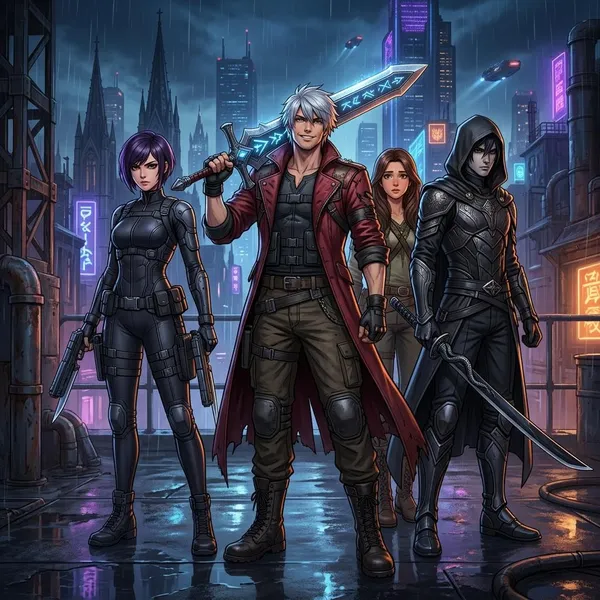
The voice cast gives the anime a lot of its staying power. Some characters are written with more force than nuance, but the performances add rhythm, menace, and emotional shading where the script is thinner. If you are deciding whether to keep watching after a mixed early impression, the cast is one of the better reasons to continue.
Johnny Yong Bosch as Dante
Johnny Yong Bosch is a strong Dante because he balances coolness with damage underneath. The sarcasm is there, but the performance does not reduce him to quips. Even when a line feels clumsy, Bosch usually finds a natural delivery that keeps Dante watchable.
Scout Taylor Compton as Lady
Scout Taylor Compton gives Lady a hard, confrontational presence. The performance has energy, though the writing sometimes leans too heavily on aggression. Viewers who like Lady as a sharp counterweight to Dante may enjoy that intensity; viewers looking for more emotional variation may find the character less balanced than the actor's commitment deserves.
Hoon Lee as White Rabbit
Hoon Lee makes White Rabbit theatrical without letting the character become forgettable noise. His delivery gives the villain an unstable, performative quality, which helps in a short season where antagonists need to register quickly. The role could easily have felt generic, but the voice work makes him more distinct.
Kevin Conroy as VP Baines
Kevin Conroy brings weight to VP Baines, and that matters because the political side of the story needs authority to work. His voice makes institutional dialogue feel more serious and controlled than it might otherwise. For many viewers, his presence also adds a bittersweet layer, but the performance stands on its own even without that context.
Robbie Daymond as Vergil
Robbie Daymond gives Vergil the cool distance the character needs. He sounds controlled, reserved, and emotionally sealed off, which creates the right contrast with Dante's louder energy. The season does not spend everything it has on Vergil, and that restraint helps his presence feel important rather than overused.
Conclusion
Season 1 is a good watch for action fans and a more conditional recommendation for strict Devil May Cry purists. Try the first two episodes and pay attention to three things: whether Dante's attitude works for you, whether the mature tone feels fun or grating, and whether the animation is enough to carry the weaker writing. If those pieces click, the anime is a messy but entertaining start with real style and enough emotional promise to make another season worth watching.