Fate/Strange Fake is worth watching if you already enjoy Fate's messy lore, big personalities, and flashy supernatural fights. It is not the best first Fate anime, because the story throws out names, factions, and rules faster than it builds emotional attachment. For a fate strange fake anime review, the honest verdict is simple: exciting for invested fans, impressive but potentially overwhelming for newcomers.
Story and pacing
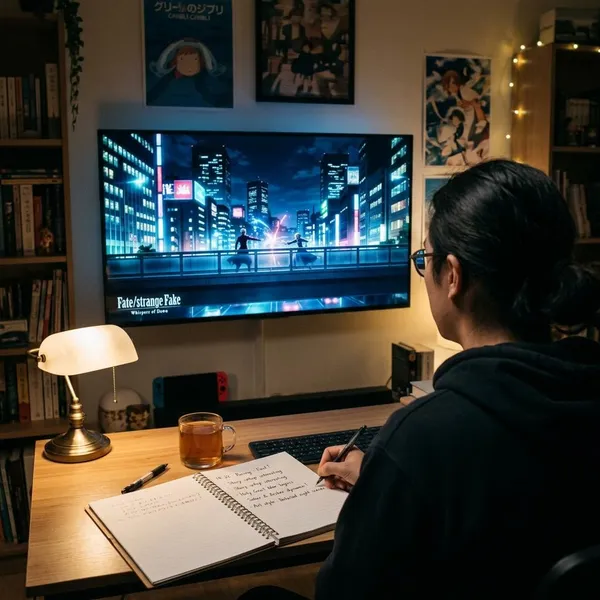
The main thing to know is that Fate/Strange Fake plays the long game. It is more interested in building a strange, unstable Holy Grail War than giving quick emotional closure. That makes the early episodes feel busy, stylish, and intriguing, but not always satisfying.
A false Holy Grail War in Snowfield
Snowfield's false Holy Grail War is the strongest story hook. The setting is not just a new location for the usual Fate formula; it is a flawed imitation of that formula, which immediately makes the rules feel unstable. That matters because Fate is usually most fun when you understand the system well enough to notice when someone is breaking it.
For existing fans, this creates a good kind of tension. You can see why the war feels wrong, why certain summons are strange, and why the whole situation seems harder to control than a standard Grail War. For a first-time viewer, the same idea may register only as "cool chaos," with less of the intended impact.
Constant setups and character reveals
The anime loves entrances. A new Master appears, a Servant shows off, a hidden faction hints at a bigger plan, and then the story jumps to another thread. Those reveals are often entertaining, but they also make the season feel like it is storing up payoffs for later rather than spending them now.
This is not automatically a flaw. Ryogo Narita's style often works through crowded casts and overlapping motives, so the city feels alive instead of neatly arranged around one protagonist. The trade-off is that some scenes feel like exciting promises instead of complete dramatic moments.
Slow progress between major clashes
The strange part is that Fate/Strange Fake can feel slow while still looking active. There are confrontations, power displays, interruptions, and sudden shifts, but not every clash changes the direction of the plot in a clear way.
- Best fit: viewers who enjoy buildup, lore clues, and faction movement.
- Weaker fit: viewers who want each fight to settle a rivalry or change a relationship.
- Common mistake: expecting the pace of Unlimited Blade Works or the emotional focus of Fate/Zero.
Few early emotional payoffs
The early emotional hook is weaker than the premise. Many characters are interesting, but the anime does not spend long enough with most of them to make their pain, fear, or ambition fully land. You may be curious about almost everyone while strongly attached to only a few.
Cast and character focus
The cast is both the biggest attraction and the biggest structural burden. Fate/Strange Fake has a wide lineup of Masters, Servants, observers, and manipulators, and many of them are immediately memorable. The issue is not blandness; it is competition for attention.
A varied lineup of Masters and Servants
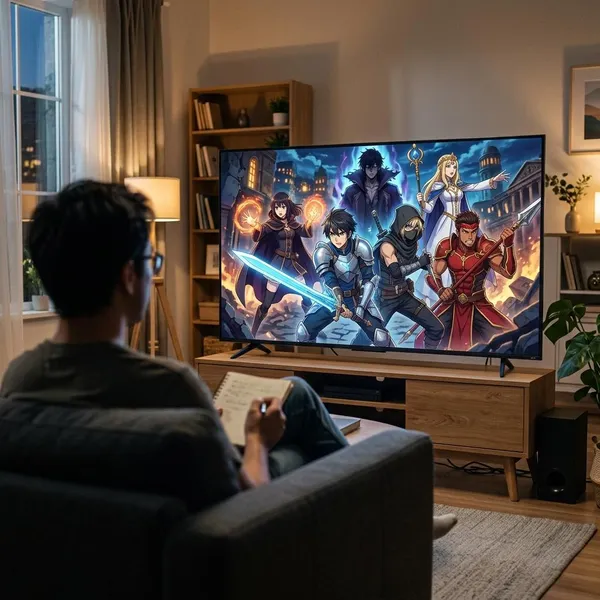
The Masters do not feel like copies of one another. Some are reckless, some calculating, some frightening, and some hard to read, which gives different scenes a different flavor. The Servants also bring the expected Fate mix of mythic presence, arrogance, mystery, and danger.
Returning figures such as Gilgamesh and Enkidu carry instant weight if you know the franchise, while less familiar characters keep the anime from becoming pure fan service. The best pairings work because you can sense tension before the story has fully explained it.
Memorable characters with limited screen time
Several characters make a strong first impression quickly, especially through design, voice acting, and staging. Flat has unusual energy, Ayaka brings mystery, and familiar Fate figures can dominate a scene almost immediately.
Multiple storylines competing for attention
The anime spreads its focus across several active conflicts in Snowfield. That gives the world scale, but it also means emotional momentum gets interrupted often. Just when one thread starts to tighten, another one demands attention.
This works best for viewers who like ensemble storytelling. A casual viewer watching one episode a week may struggle to keep every name and faction straight. Someone binge-watching with fresh memory of the previous episode will probably have an easier time following the moving parts.
No clear lead holding the story together
There is no single protagonist who neatly carries the whole story. That choice makes the war itself feel like the center of the anime, which is bold and sometimes refreshing.
It also creates distance. A clear lead gives viewers a place to stand emotionally; Fate/Strange Fake asks you to choose your own anchor. Some will latch onto Ayaka, some onto Flat, and some onto established Fate icons. That freedom is interesting, but it makes the anime less immediately gripping than a more focused entry.
Animation, action, and sound
Production is the easiest part of the anime to praise. Even when the story feels overloaded, the visuals, action direction, music, and performances keep the experience engaging. This is the main reason the series remains watchable even when the pacing becomes frustrating.
If your first priority is audiovisual impact, Fate/Strange Fake delivers. If your first priority is clean storytelling, the production may impress you without fully fixing the larger structure.
Fast and creative fight scenes
The fight scenes are fast, stylish, and usually readable. They feel tied to the personalities and legends of the characters instead of turning into generic bursts of light. That is important for Fate, where a good battle should show more than who is stronger.
Strong visual direction
The visual direction helps organize a crowded story. Lighting, framing, and atmosphere make different factions and confrontations feel distinct, which is useful when the script is throwing so much information at the viewer.
Snowfield also benefits from the contrast between ordinary city spaces and mythic violence. Rooftops, streets, interiors, and open urban areas all feel like places where the war could suddenly spill out of control.
Detailed character and setting design
Character design does practical work here. With this many people on screen, recognizable silhouettes, costumes, expressions, and body language help viewers keep track even when names blur together.
The setting design supports the same goal. Snowfield may not be as iconic as Fuyuki, but it feels broad and unstable enough for this larger, stranger war. The city gives the story room to feel unpredictable.
Hiroyuki Sawano's powerful score
Hiroyuki Sawano's music gives the anime scale and urgency. It makes entrances feel heavier, confrontations feel bigger, and setup scenes feel less static than they might on the page.
Strong Japanese and English voice acting
Both the Japanese cast and English dub help the large cast stay distinct. That matters in a show where characters often need to make an impression quickly.
- Japanese audio: best if you want the original performance style and dramatic intensity.
- English dub: useful if dense subtitles make the names, factions, and exposition harder to track.
- Either choice: the performances add personality before the writing has time to fully develop everyone.
Is Fate/Strange Fake beginner-friendly?
Not really. A new viewer can watch it and still enjoy the action, but it is not a smooth starting point. The anime expects you to understand the basic Holy Grail War setup and to recognize why this version is abnormal.
The first thing to check is your comfort with Fate basics. If "Master," "Servant," "class," "command spell," and "Holy Grail War" already make sense to you, the anime becomes much easier. If those terms are new, start elsewhere unless you are comfortable being confused for a while.
Easier with basic Holy Grail War knowledge
Basic Fate knowledge changes the experience. You do not need to know every spinoff, but you should understand how Masters and Servants normally work, why classes matter, and how a Grail War usually functions.
Harder without wider Fate context
Wider Fate context makes certain names, reveals, and tonal choices hit harder. The anime does not pause every time it uses franchise language, so a complete newcomer may sense that something is important without understanding the full reason.
That does not make the show impossible to enjoy. It just changes the kind of enjoyment. A newcomer may get spectacle and mystery; a Fate fan gets spectacle, mystery, and the extra pleasure of seeing the formula distorted.
Packed with names, factions, and lore
The show introduces a lot quickly: Masters, Servants, organizations, observers, hidden agendas, and lore-heavy implications. Missing a small detail can make later scenes harder to follow.
Better as a later Fate entry
Fate/Strange Fake works better after at least one core Fate anime. Fate/Zero or Unlimited Blade Works gives enough foundation for most viewers, while Heaven's Feel or The Case Files of Lord El-Melloi II can help if you want more context before jumping into denser material.
- Start here only if: you enjoy being dropped into complex fantasy settings.
- Watch later if: you want the rules and stakes to feel clearer.
- Skip for now if: you dislike ensemble stories without one obvious lead.
Conclusion
Fate/Strange Fake is an easy recommendation for Fate fans who want a chaotic ensemble story with excellent action, sharp production, and a warped take on the Holy Grail War. It is a weaker recommendation for complete beginners or viewers who need fast emotional payoff, because the anime spends much of its early runtime expanding the board instead of resolving it. Watch it when you are ready for dense lore and shifting focus; start with a more central Fate entry if you want the franchise at its clearest.