A fair kingdom anime review has to start with the obvious trade-off: Kingdom is absolutely worth watching if you enjoy war strategy, political tension, and long character arcs, but Season 1's CGI is a real hurdle. If rough visuals make you drop shows quickly, consider reading the early manga first instead of forcing yourself through the weakest-looking part of the adaptation.
Why the Kingdom story works
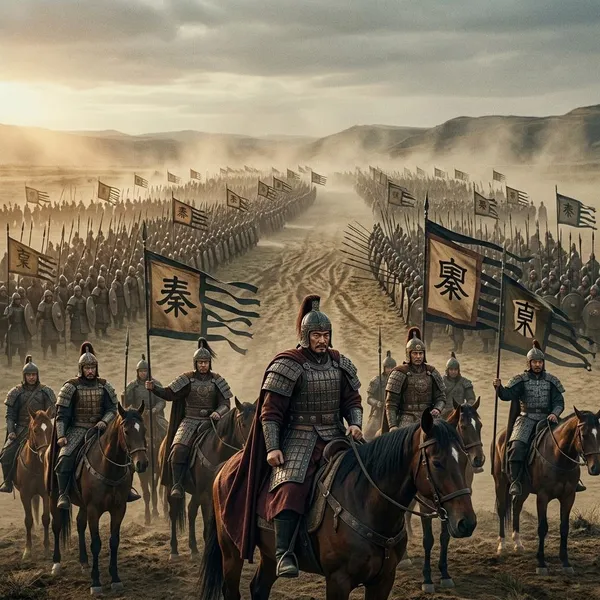
Kingdom works because its battles are not just big clashes with dramatic speeches. The series gives each campaign a purpose: a victory can change rank, political leverage, morale, and the balance between states. That makes even long arcs feel connected rather than episodic.
It also gives the viewer a clear reason to care about both levels of the story. Xin's dream of becoming a great general is personal and easy to follow, while Ying Zheng's goal of unifying China gives the conflict a much larger historical weight. If you like anime where wins have consequences instead of resetting after every arc, this is one of the show's biggest strengths.
Clear battlefield tactics
The best battles are readable. Kingdom explains why a formation matters, how morale breaks, and why one commander's decision can swing an entire front. You do not need to be a military-history fan to follow the logic, which is important because the tension often comes from watching plans collide.
- Look for command decisions: the smartest move is not always the flashiest one.
- Watch morale shifts: exhausted troops, panic, and confidence often matter as much as numbers.
- Pay attention to positioning: flanks, terrain, and timing decide many fights before the final duel.
High-stakes campaign arcs
Campaigns in Kingdom usually feel important because the result changes what characters can do next. A promotion, a lost commander, or a damaged army is not treated as background noise. The story remembers it.
This is where the series becomes especially rewarding for patient viewers. If you prefer quick tournament-style fights, some arcs may feel long. If you enjoy watching a war slowly tilt through planning, setbacks, and costly breakthroughs, the pacing starts to feel like a feature rather than a flaw.
A strong mix of war and politics
War gets the louder scenes, but politics gives those scenes weight. Ying Zheng's court problems make it clear that winning outside the capital does not automatically mean stability inside it.
That balance keeps the anime from becoming one battlefield after another. One viewer may come for cavalry charges and duels; another may stay for succession struggles, loyalty tests, and the question of whether Qin can actually hold together long enough to chase unification.
Long stories with earned payoffs
Kingdom asks for patience, but it usually pays that patience back. Xin does not become a great leader overnight, and major political shifts are not solved with one speech. Promotions, rivalries, trust, and authority build over time, which makes later victories feel deserved instead of handed to the cast.
Characters that keep Kingdom engaging
The cast keeps the long war story from feeling like a moving map of armies. Xin brings raw ambition, Ying Zheng brings long-term purpose, and the generals give each campaign a different personality. Just as importantly, the supporting cast often affects the outcome instead of standing around the protagonist.
Xin's steady rise
Xin starts as the kind of loud, stubborn protagonist many anime fans will recognize, but his growth works because the series lets him be incomplete. He has courage and instinct before he has command judgment.
That difference matters. Watching him learn the cost of leading other people is more interesting than watching him simply become stronger. For viewers who like gradual character progression over instant genius, Xin's rise is one of the main reasons to stick with the series.
Ying Zheng's political struggle
Ying Zheng gives Kingdom its larger direction. His fight is less about swinging a weapon and more about legitimacy, survival, and convincing others that unification is more than a personal ambition. Without him, the anime would still have strong battles, but it would lose much of its political spine.
Memorable generals and rivals
The generals and rivals are not interchangeable boss characters. Some are calculating, some are instinctive, some inspire loyalty through presence alone, and some feel dangerous before they even move.
- Veteran commanders show Xin what real leadership looks like.
- Rivals measure his progress without needing constant exposition.
- Enemy strategists make campaigns feel uncertain instead of inevitable.
Supporting characters with real impact
The supporting characters matter most when the battlefield becomes messy. Squad members hold lines, deliver information, protect each other, and give Xin's victories a shared weight. That is a big reason the emotional moments land: losses and wins do not belong only to the main hero.
Does the Kingdom animation get better
The animation does get better, but the first season is still the hardest part to recommend. The early CGI can look stiff, especially in character movement and close-up action. If you are deciding whether to start, the key question is whether story strength can carry you until the presentation improves.
- If visuals are your top priority: read the early manga first.
- If story matters more than polish: try Season 1 with realistic expectations.
- If you are unsure after a few episodes: judge whether the tactics, politics, and cast are pulling you in despite the look.
- If you reach later seasons: the anime becomes much easier to enjoy and recommend.
Heavy CGI in Season 1
Season 1's CGI is the adaptation's biggest weakness. Characters can move awkwardly, expressions can feel flat, and some dramatic moments lose impact because the presentation is too rigid.
The problem is not only that it looks dated. Kingdom depends on physical force, battlefield pressure, and emotional reactions, so stiff animation can make strong scenes feel less powerful than they should.
Cleaner visuals in later seasons
Later seasons are noticeably easier on the eyes. Character art becomes cleaner, expressions read better, and the show stops fighting its own story so much. The improvement does not erase every limitation, but it changes the experience from "push through this" to "the adaptation is finally supporting the material."
Stronger action direction over time
Better direction may be even more important than better drawings. Large battles need clear geography: where the units are, who is under pressure, and why a sudden move matters.
As the anime continues, the action becomes more coherent. Charges, retreats, and breakthroughs are easier to track, which lets the strategy land without relying only on dialogue to explain what happened.
Better battlefield scale and movement
The later anime does a stronger job of showing armies as armies, not just backgrounds for hero fights. When cavalry, infantry lines, and pressure points are easier to see, Kingdom feels closer to the large-scale war epic it is trying to be.
Kingdom anime vs manga
The best choice depends on what bothers you more: rough animation or reading long battle arcs on the page. The manga gives the strongest first impression, while the anime becomes more appealing once the visuals improve and the sound design, music, and voice acting can carry major scenes.
| Best fit | Choose this version | Why it makes sense |
|---|---|---|
| You dislike dated CGI | Manga first | The opening arcs look stronger and feel less distracting. |
| You prefer sound and motion | Anime | Speeches, charges, and battlefield movement can feel more immediate. |
| You want the smoothest route | Mixed approach | Read early arcs, then switch once the anime presentation improves. |
The anime adds voices music and motion
The anime's biggest advantage is atmosphere. Commanders shouting orders, music building before a charge, and armies moving across the field can make major moments feel more immediate than they do silently on the page.
This benefit is much stronger after the early production roughness. For anime-only viewers who can tolerate the first stretch, the later seasons provide an energy the manga naturally cannot reproduce.
The manga has stronger early artwork
The manga is the safer starting point if you want Kingdom to impress you right away. Its early artwork handles expressions, impact, and battle composition with far more confidence than Season 1 of the anime.
The anime makes battles easier to follow
Some readers find large manga battles dense, especially when formations shift across several pages. The anime can make that movement easier to process because retreats, encirclements, and charges unfold in sequence.
That does not mean the anime is always clearer, especially early on. But once the direction improves, it becomes a strong option for viewers who understand action better when they can watch it move.
The manga avoids the early CGI
The simplest reason to start with the manga is that it removes the anime's biggest barrier. You get the core story, characters, and political setup without the stiff early visuals. If you already know bad CGI will annoy you, reading first is not a downgrade; it is probably the smarter entry point.
Conclusion
Kingdom is worth watching if you can accept that the adaptation starts below the quality of its story. The safest recommendation is to read the early manga if visuals matter a lot, then move to the anime when its presentation improves. If you care most about tactics, political ambition, and long-term character growth, the rough start is a hurdle rather than a dealbreaker.