If you came for the beginning after the end anime review verdict, the short version is: the story is still strong enough to be interesting, but the anime is not the best way to experience it. Arthur Leywin remains a genuinely compelling lead, yet the adaptation often looks too stiff and rushed for a fantasy series built on emotion, growth, and action.
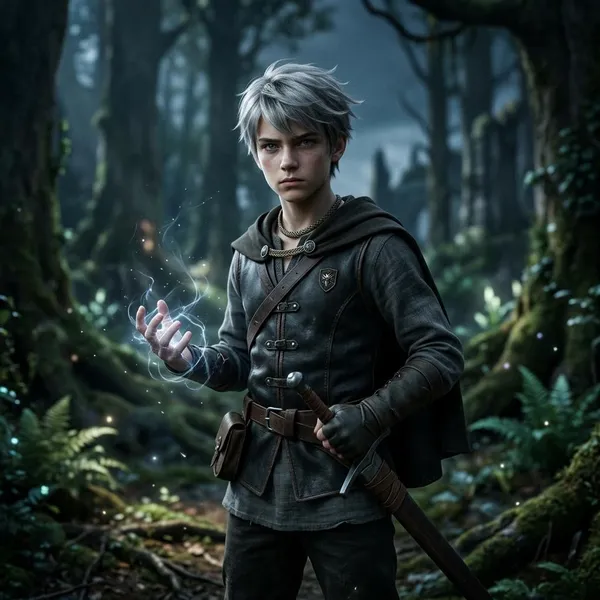
Is Arthur Leywin a strong main character?
Arthur is the main reason the anime still works at all. He is not just another talented fantasy child with convenient powers; his appeal comes from the gap between who he used to be and who he is trying to become.
That matters for different viewers in different ways. If you are new to the series and mainly want a character-driven fantasy, Arthur gives the anime enough emotional pull to keep going. If you already love the manhwa or web novel, he may also be the clearest reminder of the stronger story underneath the weaker production.
His past life creates inner conflict
Arthur's memories as King Grey give him more weight than a typical reincarnated protagonist. He carries experience, regret, and the habits of someone who once lived with power but without much warmth. That history makes his second life feel less like a reset button and more like an uncomfortable chance to become a different person.
The anime is at its best when it lets that contrast show quietly: a child's body, an adult mind, and a guarded emotional core. Not every scene gives the idea enough breathing room, but the foundation is strong.
His new family changes his outlook
His parents are not background decoration. Their affection gives Arthur something his old life lacked, and that changes the way he thinks about strength. He is not only learning magic or combat; he is learning what it means to be loved without having to rule, win, or prove himself first.
These family scenes are also where the anime's weaker visuals hurt less. A warm line delivery or a simple domestic moment can still land, even if the animation is not especially expressive.
His power comes with clear limits
Arthur is gifted, but the story wisely avoids making him feel completely untouchable. His knowledge is ahead of his body, his experience does not solve every emotional problem, and dangerous situations can still move faster than he can control.
- Knowledge is not the same as capacity: he may understand more than others, but he still has a young body.
- Talent does not erase risk: stronger enemies and unfamiliar situations can still overwhelm him.
- Power does not fix loneliness: his biggest growth is emotional, not just magical.
His growth feels earned over time
Arthur's progress works because it has stages. He trains, adapts, makes connections, and slowly changes his priorities. The anime sometimes compresses that growth, but it does not erase the sense that he is building a new life rather than simply collecting upgrades.
For a plot-focused viewer, that is enough to make him worth following. For someone watching mainly for high-impact fantasy action, the character writing may not fully make up for the flat presentation around him.
Why did the anime adaptation face backlash?
The backlash came from a simple mismatch: fans expected the anime to elevate popular source material, but the production often made it feel smaller. The core story is not the main issue. The bigger problem is that the adaptation struggles in the areas anime needs most: motion, timing, atmosphere, and visual impact.
A casual anime-only viewer may find it watchable if expectations are modest. A longtime reader is more likely to feel disappointed because the original material suggests a much richer, sharper fantasy experience than the anime usually delivers.
Stiff movement weakens basic scenes
Stiff movement affects more than battles. Conversations often feel visually flat because characters do not move, gesture, or react with much subtlety. In a story built around family bonds and personal change, that lack of body language makes emotional scenes feel less alive than they should.
Static fights lack speed and impact
The fights are where the adaptation's limits become hardest to ignore. Many action scenes rely on cuts, held frames, or small bursts of motion instead of fluid exchanges. You can usually understand what is happening, but you do not always feel the force, danger, or speed.
That is a major problem because combat in this story should reveal Arthur's intelligence as much as his strength. When the staging feels static, his tactical side becomes less exciting on screen.
Rushed pacing hurts emotional moments
Some important moments arrive before the anime has fully prepared them, then pass before the viewer can sit with them. A bond, farewell, or realization may be present in the plot, but the emotional weight feels thinner because the scene does not linger long enough.
This is especially noticeable if you are watching after reading the manhwa or web novel. You may recognize the moment, but recognition is not the same as impact.
Plain visuals undersell the fantasy world
The fantasy setting should feel broad and inviting, with magic, creatures, families, politics, and unfamiliar places giving Arthur's new life a sense of scale. Instead, the anime often presents the world in a serviceable but plain way.
That does not make the story confusing, but it does make it less memorable. A newcomer can follow the setting; a fan may wonder why it does not feel more distinct.
Do the voice acting and music help?
The audio is one of the adaptation's safer strengths. The voice acting gives the emotional scenes sincerity, and the music often adds the warmth or tension that the visuals do not fully provide.
Still, audio support has a ceiling. It can make a quiet family scene more touching or a fight feel less empty, but it cannot replace expressive animation, strong choreography, or a vivid fantasy look.
The cast carries the emotional scenes
The performances help preserve the heart of the story. Arthur needs to sound unusually mature without becoming cold, and the family scenes need enough tenderness to explain why his new life changes him. The cast usually handles that balance better than the animation does.
For viewers deciding whether to continue after a weak early impression, this is the best reason to give the anime a little more time. If the characters' voices pull you in, the show becomes easier to forgive.
The music adds warmth and tension
The soundtrack often does quiet repair work. Softer music helps the family material feel gentler, while more dramatic cues give danger scenes a clearer emotional shape.
It is not a show-stealing score, but it understands what the story is trying to feel like. That is useful in an adaptation where the image on screen does not always carry enough mood by itself.
The sound gives fights some extra weight
Sound effects give some attacks, spells, and impacts more presence than the animation alone provides. In weaker fights, that can be the difference between a scene feeling completely flat and merely underwhelming.
- It helps with basic impact: hits and spells feel less weightless.
- It supports urgency: danger is easier to sense even when movement is limited.
- It cannot create choreography: the fights still need better motion to become memorable.
The audio cannot fix the weak visuals
This is the adaptation's hard limit. The anime sounds more convincing than it looks, but fantasy action needs visual energy. If you mostly care about story and character tone, the audio may carry you through. If you want the most powerful version of the series, the manhwa or web novel is still the safer choice.
Conclusion
The anime is worth trying only with the right expectations: watch it if you want a quick, accessible entry point into Arthur's story, but do not expect it to show the series at its best. Arthur Leywin, the family material, and the audio work give the adaptation some value, while the stiff animation and plain visual direction keep it from becoming the fantasy adaptation fans hoped for.